
As the enticing aroma wafted from my kitchen, I couldn’t help but reminisce about the warm family dinners that always revolved around a steaming pot of Nigerian Chicken Stew. This dish is a delightful fusion of tender chicken and a medley of spices and fresh vegetables, perfect for anyone seeking comfort food on a busy weeknight. With its quick prep time and the ability to adjust spice levels to suit anyone’s palate, this hearty stew is sure to become your new favorite. Gather around the table, because this recipe will prompt the kind of conversation that makes meals memorable. Are you ready to dive into this flavorful journey?

Why is Nigerian Chicken Stew a Must-Try?
Comforting: This stew wraps you in warmth and flavor, making it the ultimate go-to for busy weeknight dinners.
Flavor Fusion: The blend of spices and fresh vegetables creates a tantalizing harmony that will tantalize your taste buds.
Quick Prep: With minimal effort, you’ll have a vessel of deliciousness simmering on the stove, perfect for those hectic evenings.
Crowd Pleaser: Whether you’re serving family or hosting friends, everyone will be asking for seconds, making it a hit for gatherings! Consider pairing it with Steamed Rice or crispy Plantains for a complete meal.
Customizable Heat: Adjust the spice level to suit your family’s taste, ensuring everyone enjoys their bowlful!
Meal Prep Friendly: This dish keeps well and tastes even better the next day, making it perfect for meal planning.
Nigerian Chicken Stew Ingredients
For the Chicken
• Bone-in Chicken Thighs/Drumsticks – Main protein providing richness and flavor; boneless thighs can be used for quicker cooking.
• Salt – Enhances all flavors; essential for seasoning the chicken.
• Black Pepper – Adds subtle heat and depth.
For the Seasoning
• Paprika – Offers smoky notes and vibrant color.
• Curry Powder – Contributes to the dish’s signature warmth and complexity.
• Thyme – Herb adds aromatic flavor; fresh thyme can elevate the taste.
• Garlic Powder – Provides savory depth to the stew.
• Ginger Powder – Adds warmth and a touch of spiciness.
For the Base
• Onion – Base flavor for the stew; must be chopped finely.
• Small Red Onion – Offers additional flavor and aroma.
• Vegetable Oil – For searing the chicken and cooking; olive oil can be a substitute.
For the Vegetables
• Roma Tomatoes – Provide acidity and freshness; fresh tomatoes improve flavor, but canned can work in a pinch.
• Red Bell Pepper – Adds sweetness and beautiful color.
• Scotch Bonnet Peppers – Impart significant heat and flavor; adjust quantity based on heat preference.
• Tomato Paste – Intensifies tomato flavor; frying it briefly is essential for depth.
For Finishing Touches
• Bouillon Cube (Maggi or Knorr) – Enhances savory depth; can be omitted for a vegetarian version.
• Additional Salt – For final seasoning to taste.
Enjoy creating this delicious Nigerian Chicken Stew that warms the heart and tantalizes the taste buds!
Step‑by‑Step Instructions for Nigerian Chicken Stew
Step 1: Marinate the Chicken
Begin by combining bone-in chicken thighs or drumsticks in a bowl with salt, black pepper, paprika, curry powder, thyme, and finely chopped onion. Mix thoroughly, ensuring each piece of chicken is well-coated. Cover and allow to marinate for at least 30 minutes in the refrigerator, letting the flavors meld together beautifully.
Step 2: Sear the Chicken
In a large pot, heat about 2-3 tablespoons of vegetable oil over medium-high heat until shimmering. Carefully add the marinated chicken pieces, searing them for 4-5 minutes on each side until they turn golden brown. Once properly browned, remove the chicken and set aside on a plate, keeping the pot on the heat for the next steps.
Step 3: Prepare the Blended Mixture
While the chicken rests, blend together Roma tomatoes, red bell pepper, small red onion, and Scotch bonnet peppers in a blender until you achieve a smooth consistency. This vibrant mixture will form the base of your Nigerian Chicken Stew, providing an aromatic and flavorful profile. Set the blended ingredients aside for later.
Step 4: Fry the Tomato Paste
In the same pot where you seared the chicken, add a tablespoon of tomato paste. Fry it over medium heat for about 2 minutes, stirring continuously, until it darkens and deepens in color. This step intensifies the tomato flavor, which is essential for the rich taste of your Nigerian Chicken Stew.
Step 5: Simmer the Tomato Mixture
Now, pour in the blended tomato mixture into the pot and bring it to a gentle simmer. Cook for about 10 minutes, allowing it to reduce slightly and thicken up. Stir occasionally, ensuring the stew does not stick to the bottom, and watch for a deepening color and fragrance, which means the sauce is developing wonderfully.
Step 6: Add Spices and Chicken
Stir in garlic powder, ginger powder, and a bouillon cube to the simmering mixture. Season with additional salt to taste. Return the seared chicken to the pot, nestling them into the flavorful sauce. This step infuses the chicken with the rich flavors of the stew, ensuring every bite will be delectable.
Step 7: Let It Simmer
Cover the pot with a lid and reduce the heat to low, allowing the Nigerian Chicken Stew to simmer for 25-30 minutes. The chicken should become tender and fully cooked while the flavors meld together beautifully. Check occasionally, stirring gently to prevent sticking and to keep everything mixed well.
Step 8: Final Adjustments and Serve
After simmering, give the stew a taste and adjust seasoning if needed, adding more salt or spices. Once the chicken is tender and the sauce is thick, remove from heat. Serve the comforting Nigerian Chicken Stew hot, accompanied by steamed rice or fried plantains to soak up the vibrant flavors.

Expert Tips for Nigerian Chicken Stew
-
Fresh Ingredients Matter: Use fresh vegetables for the best flavor. Canned tomatoes can work, but fresh Roma tomatoes truly elevate the stew.
-
Adjust Spice Levels: Start with one Scotch bonnet pepper and taste as you go. You can always add more if you prefer a spicier Nigerian Chicken Stew.
-
Tomato Paste Technique: Don’t skip frying the tomato paste! This step is crucial for enhancing richness and depth in the stew.
-
Taste as You Cook: Sneak a taste during cooking to adjust seasonings for balance. Remember, a pinch more salt can make all the difference!
-
Perfectly Tender Chicken: To ensure chicken stays tender, avoid overcooking the stew. Simmer gently just until the meat reaches the desired doneness.
How to Store and Freeze Nigerian Chicken Stew
Fridge: Store leftover Nigerian Chicken Stew in an airtight container for up to 4 days. Allow it to cool before sealing to maintain freshness.
Freezer: For longer storage, freeze the stew in freezer-safe containers for up to 2 months. Make sure to leave some space at the top as the stew may expand when frozen.
Reheating: Thaw frozen stew in the fridge overnight. Reheat on the stove over low heat, stirring occasionally, until heated through. You can add a splash of water or broth if needed to achieve the desired consistency.
Serving: Always serve hot! The flavors of the Nigerian Chicken Stew improve with time, making it a great choice for meal prep and leftovers.
Make Ahead Options
These delicious Nigerian Chicken Stew components can be prepped in advance, making meal planning a breeze for busy home cooks! You can marinate the chicken with spices (salt, black pepper, paprika, curry powder, thyme, and chopped onion) up to 24 hours ahead, keeping it stored in the refrigerator to let the flavors meld. Additionally, you can blend the tomatoes, peppers, and onions up to 3 days in advance; just refrigerate the mixture in an airtight container to maintain freshness. When you’re ready to cook, simply follow the remaining steps—searing and simmering—and you’ll have a comforting and flavorful meal that’s just as delightful as if you made it from scratch!
What to Serve with Nigerian Chicken Stew
Building a complete meal around this savory stew can create a feast for the senses, inviting everyone to share in the warmth.
-
Steamed Rice: A classic pairing that soaks up the rich sauce, creating a satisfying balance of flavors and textures. It’s a comforting staple that complements the stew perfectly.
-
Crispy Plantains: The sweetness of fried or baked plantains harmonizes beautifully with the savory spices of the stew, adding a delightful contrast that’s hard to resist.
-
Nigerian Fufu: This traditional side is great for scooping up the stew and adds a unique, chewy texture that enhances the meal’s authenticity.
-
Simple Coleslaw: A fresh blend of cabbage and carrots tossed in a light dressing adds a refreshing crunch, cutting through the richness of the stew delightfully.
-
Grilled Veggies: Charred zucchini, bell peppers, and onions not only add color to your plate but also a slightly smoky flavor that pairs well with the dish.
-
Soursop Juice or Zobo Drink: The sweet and tangy notes of these beverages refresh your palate and offer a delightful contrast to the savory stew.
Enjoy crafting a heartwarming experience around your Nigerian Chicken Stew with these tasty accompaniments!
Nigerian Chicken Stew Variations & Substitutions
Feel free to make this comforting dish your own with these creative twists and substitutions that cater to different tastes and dietary needs!
-
Vegetarian: Substitute chicken with chickpeas or diced tofu for a hearty, plant-based version. This allows everyone to enjoy the warm flavors without compromising on heartiness.
-
Spicy Twist: For an extra kick, add a teaspoon of cayenne pepper along with the Scotch bonnet peppers. This method invites a fiery flavor, perfect for those who crave a lively stew!
-
Creamy Addition: Stir in a splash of coconut milk toward the end for a rich, creamy texture. This addition brings a delightful balance to the spices and adds a tropical twist.
-
Sweet Element: Incorporate diced sweet potatoes for a touch of sweetness and added nutrition. This variation enriches the stew with a comforting, subtle sweetness that pairs beautifully with the savory flavors.
-
Smoky Flavor: Use smoked paprika instead of regular paprika for an intriguing depth of flavor. This smoky infusion creates a unique twist and enhances the overall complexity of the stew.
-
Low-Sodium: To make this stew more heart-healthy, use low-sodium chicken broth in place of bouillon cubes. It’s a simple swap that maintains flavor without excessive salt.
-
Herb Infusion: Toss in fresh basil or parsley just before serving for a burst of fresh flavor. This brightens the stew and adds a lovely color contrast that’s sure to impress.
-
Chunky Veggies: Add chopped carrots or green beans for extra texture and nutrition. Mixing in vegetables not only enhances the visual appeal but also enriches the comforting nature of the dish.
Enjoy exploring these variations, and for more delicious meal ideas, try my popular Chopped Chicken Caesar or indulge in the flavors of Sticky Garlic Chicken. Happy cooking!

Nigerian Chicken Stew Recipe FAQs
How do I pick the best tomatoes for this stew?
Absolutely! For the freshest flavor, I recommend using ripe Roma tomatoes. Look for tomatoes that are firm, with a deep red color and smooth skin. Avoid any with dark spots or wrinkling, as these can indicate overripeness. If you can’t find fresh tomatoes, high-quality canned Roma tomatoes are a great alternative.
How should I store leftover Nigerian Chicken Stew?
Leftover stew can be refrigerated in an airtight container for up to 4 days. Allow the stew to cool to room temperature before sealing to keep it as fresh as possible. Just make sure to cover it tightly; you want to trap in all those delicious flavors!
Can I freeze Nigerian Chicken Stew?
Absolutely! To freeze the stew, store it in freezer-safe containers, leaving about an inch of space at the top for expansion. It will keep well for up to 2 months. When you’re ready to enjoy it again, thaw it overnight in the fridge and reheat gently on the stove.
What if my stew is too spicy?
Very! If you find the heat a bit overwhelming, there are a few ways to tone it down. You can add more tomato sauce or a bit of cream to balance the heat. Additionally, serving the stew over rice or alongside plantains can help mellow the spiciness without losing the flavorful goodness of the stew.
Are there any dietary considerations for my family or pets?
Yes! Always keep in mind any allergies or sensitivities in your family. For those avoiding meat, this stew can easily be adapted using chickpeas or lentils instead of chicken. However, please ensure the ingredients are pet-safe if you’re sharing with furry friends, particularly avoiding onions and certain spices that can be harmful to them.
How do I know when the chicken is cooked through?
To ensure perfectly tender chicken, I recommend using a meat thermometer. The internal temperature should reach 165°F (75°C). Alternatively, the chicken should be tender and separate easily from the bone if you’re using bone-in pieces. Always check that there’s no pink meat left near the bone to confirm it’s fully cooked.
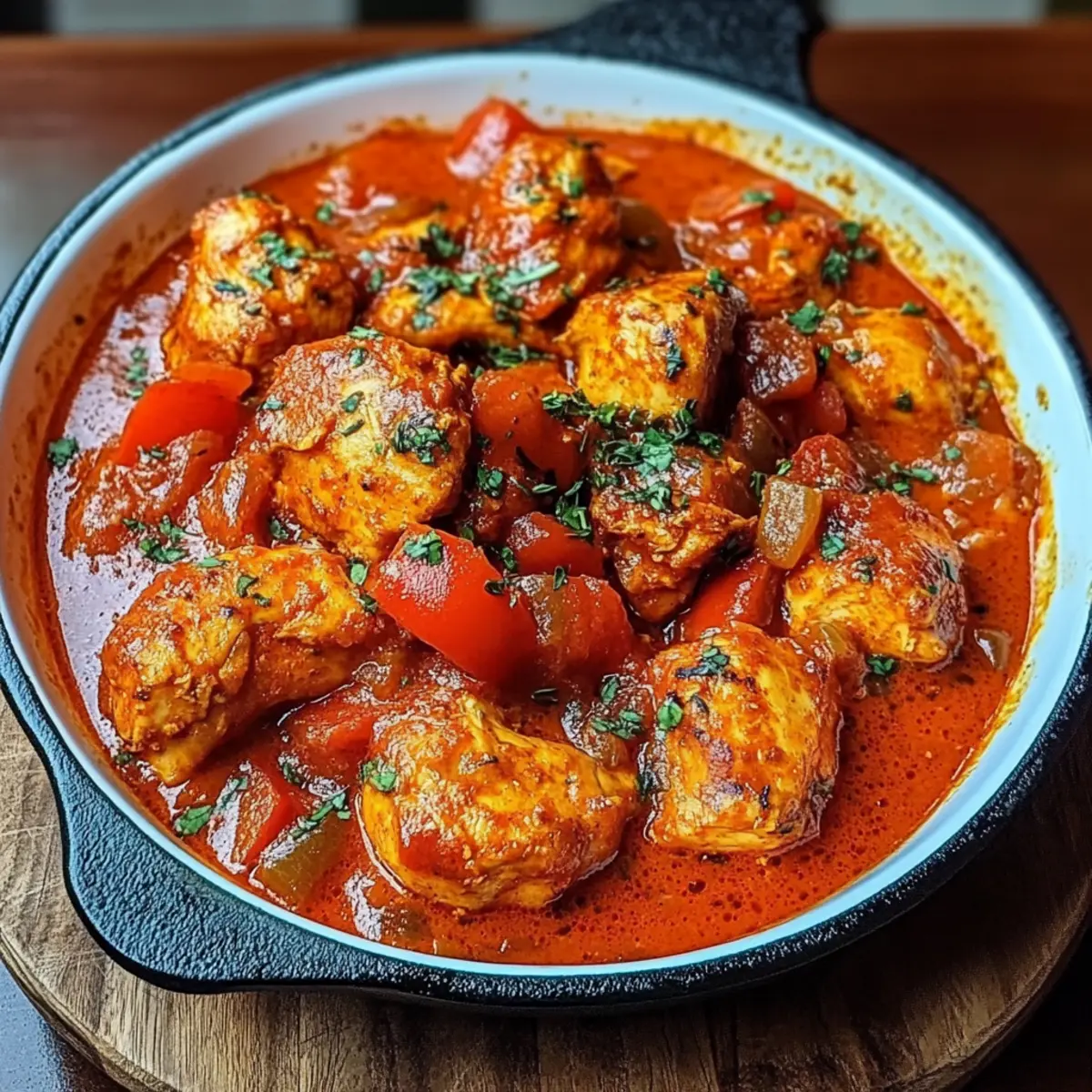
Nigerian Chicken Stew: Cozy Comfort for Weeknight Meals
Ingredients
Equipment
Method
- Begin by combining bone-in chicken thighs or drumsticks in a bowl with salt, black pepper, paprika, curry powder, thyme, and finely chopped onion. Mix thoroughly, ensuring each piece of chicken is well-coated. Cover and allow to marinate for at least 30 minutes in the refrigerator.
- In a large pot, heat about 2-3 tablespoons of vegetable oil over medium-high heat until shimmering. Carefully add the marinated chicken pieces, searing them for 4-5 minutes on each side until they turn golden brown. Once properly browned, remove the chicken and set aside.
- While the chicken rests, blend together Roma tomatoes, red bell pepper, small red onion, and Scotch bonnet peppers in a blender until you achieve a smooth consistency.
- In the same pot where you seared the chicken, add a tablespoon of tomato paste. Fry it over medium heat for about 2 minutes, stirring continuously, until it darkens and deepens in color.
- Pour in the blended tomato mixture into the pot and bring it to a gentle simmer. Cook for about 10 minutes, stirring occasionally.
- Stir in garlic powder, ginger powder, and a bouillon cube to the simmering mixture. Return the seared chicken to the pot, nestling it into the flavorful sauce.
- Cover the pot with a lid and reduce the heat to low, allowing the Nigerian Chicken Stew to simmer for 25-30 minutes.
- After simmering, give the stew a taste and adjust seasoning if needed. Serve the comforting Nigerian Chicken Stew hot, accompanied by steamed rice or fried plantains.
Leave a Reply