
As the aroma of simmering beef fills my kitchen, I can’t help but feel a wave of nostalgia wash over me. It’s in moments like this that I remember the joy of creating something wonderful out of what we have on hand. In just 15 minutes, you can whip up a delightful Korean Beef Bulgogi Stew, using leftover bulgogi to transform your meal into a cozy, hearty experience. This quick recipe is not only a weeknight savior but also embraces the magic of Korean cuisine with its savory depth and texture, thanks to the chewy glass noodles. Perfect for days when the cravings for comfort food strike, this stew is sure to become a favorite among family and friends. Ready to dive into this flavorful journey? Let’s get cooking!
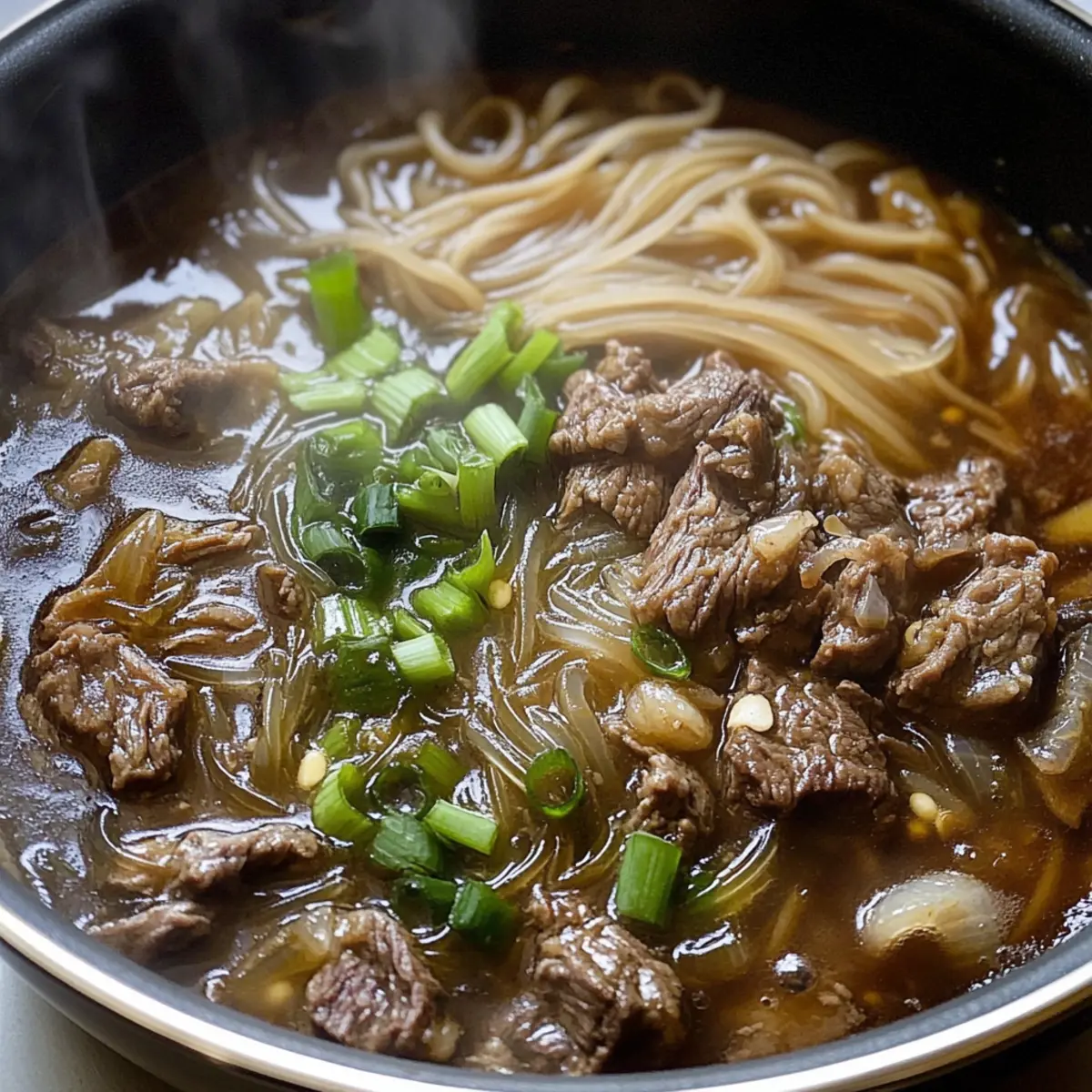
Why is Korean Beef Bulgogi Stew a Must-Try?
Quick, Flavorful Meal: In just 15 minutes, you can savor a delicious homemade meal that elevates leftovers!
Comforting Warmth: This hearty stew wraps you in a warm embrace, perfect for chilly evenings.
Unique Textures: Enjoy the contrast of tender beef bulgogi and chewy glass noodles, making every bite a delight.
Versatile Ingredients: You can mix and match with other veggies like bok choy or napa cabbage, creating endless variations.
Cultural Delight: Experience the resourcefulness of Korean cuisine, transforming leftovers into a satisfying dish.
Crowd-Pleaser: Whether you’re cooking for one or entertaining guests, this stew’s rich flavors are sure to impress! If you’re looking for other great Korean favorites, check out my tasty Korean Bbq Steak Rice Bowls or try making Caramelized Pulled Beef for something a bit different.
Korean Beef Bulgogi Stew Ingredients
Note: Gather these ingredients to create a delightful Korean Beef Bulgogi Stew that beautifully transforms your leftovers!
For the Stew
• Korean Beef Bulgogi – This is the main protein; it adds a sweet-savory note to your broth; fresh marinated beef can also be used if leftovers aren’t available.
• Sweet Potato Glass Noodles (Dangmyeon) – These provide a chewy texture that wonderfully absorbs the broth; if necessary, rice noodles or udon can be used instead.
• Enoki Mushrooms – They add tender-crisp texture and subtle earthiness to the dish; feel free to substitute with shiitake or other mushrooms.
• Green Onion – Offers a fresh, mildly oniony flavor and enhances the stew’s visual appeal.
• Water (or Beef Broth) – Serves as the base for the broth; beef broth is recommended for a richer flavor.
• Sesame Oil – This ingredient adds a nutty depth and elevates the overall flavor of the stew.
• Soy Sauce – Provides umami and balances the flavors in the Korean Beef Bulgogi Stew.
Get ready to enjoy the magic of comforting Korean flavors in just a matter of minutes!
Step‑by‑Step Instructions for Korean Beef Bulgogi Stew
Step 1: Soak the Noodles
Start by soaking the sweet potato glass noodles in warm water for about 10 minutes until they become pliable and slightly softened. This step ensures that the noodles will absorb the savory flavors of the broth beautifully later on. Once ready, drain the noodles and set them aside while you prepare the rest of the ingredients.
Step 2: Heat the Bulgogi
In a medium-sized pot, place your leftover Korean beef bulgogi over medium heat. Stir frequently for about 3-4 minutes until the bulgogi is warmed through and begins to release its savory aroma. This step revitalizes the flavors of the bulgogi, creating the perfect base for your hearty stew.
Step 3: Add Flavor
Pour in a splash of dark soy sauce and a drizzle of sesame oil over the heated bulgogi. Stir well for about 1-2 minutes, allowing the sauces to coat the beef evenly and enhance its sweet-savory notes. This infusion of flavor elevates the overall taste of your Korean Beef Bulgogi Stew.
Step 4: Prepare the Broth
Next, carefully pour in about 4 cups of water or beef broth into the pot. Increase the heat to bring the mixture to a gentle boil, which should take approximately 3-5 minutes. You’ll know it’s ready when you see bubbling at the surface, signaling the broth is gaining flavor from the seasoned bulgogi.
Step 5: Incorporate Noodles and Mushrooms
Once the broth reaches a boil, add the soaked glass noodles and enoki mushrooms to the pot. Allow the stew to cook for an additional 2-3 minutes, stirring gently to ensure the noodles and mushrooms are evenly distributed. You’ll notice the noodles become tender and the mushrooms start to soften, adding delightful textures to your stew.
Step 6: Final Touches
To complete your Korean Beef Bulgogi Stew, remove the pot from heat. Garnish generously with chopped green onions, which will not only enhance the visual appeal but also add a fresh pop of flavor. Serve immediately while it’s hot, ensuring every bowl captures the comforting essence of this delicious dish.
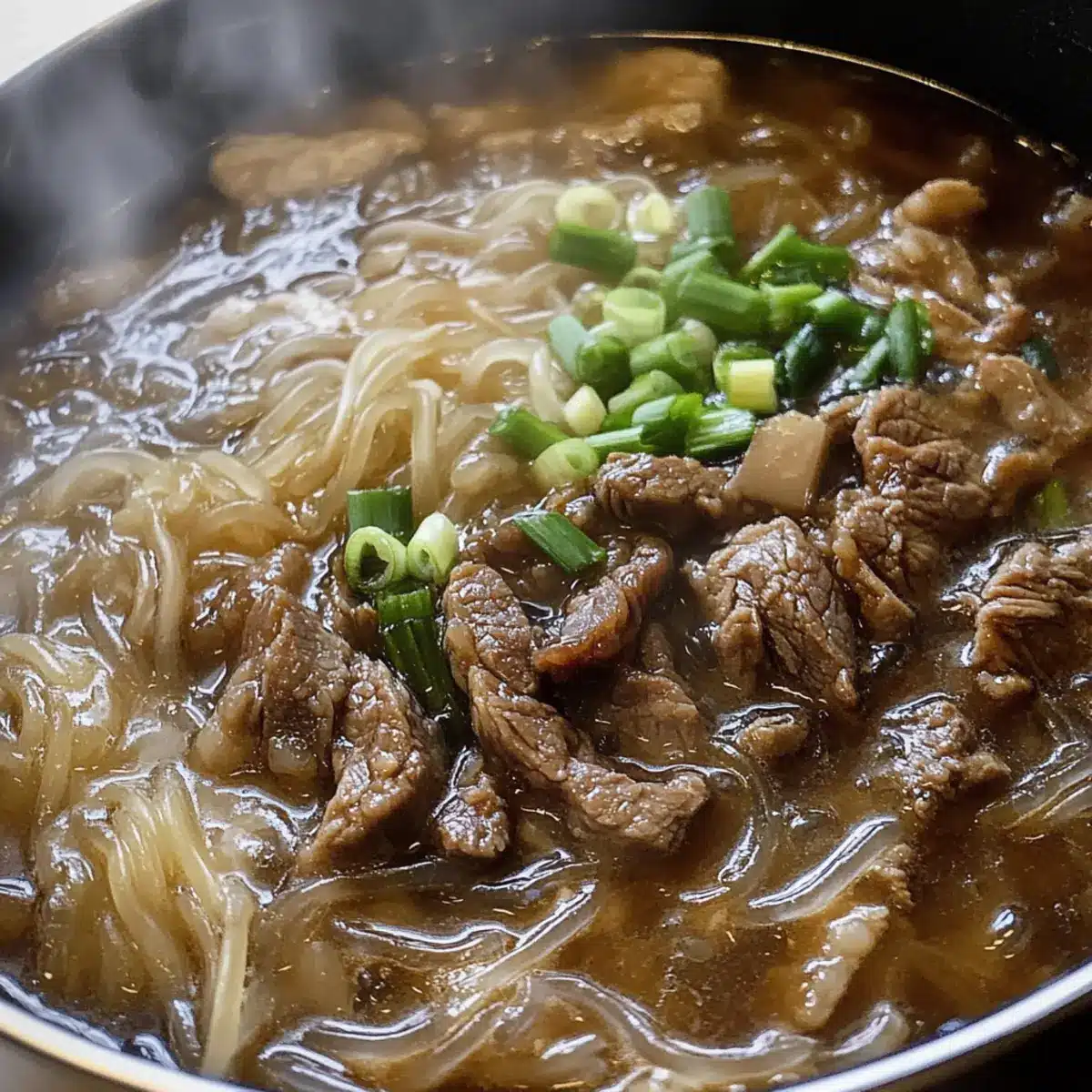
Storage Tips for Korean Beef Bulgogi Stew
Fridge: Store leftovers in an airtight container for up to 3 days. This will keep your Korean Beef Bulgogi Stew fresh and flavorful for subsequent meals.
Freezer: If you want to save it for later, freeze in a container for up to 2 months. Just be sure to let it cool completely before sealing to prevent freezer burn.
Reheating: When you’re ready to enjoy it again, gently reheat the stew on the stovetop over low heat, adding a splash of water or broth as needed to preserve the noodle texture.
Airtight Seal: Always use an airtight seal for your storage containers to keep the flavors intact, preventing any moisture loss or absorption of unwanted odors in the fridge.
What to Serve with Quick and Easy Korean Beef Bulgogi Stew
Bring warmth and flavor to your dinner table by complementing this delightful stew with a few thoughtful sides and drinks.
- Steamed White Rice: Offers a fluffy, neutral base that embraces the rich broth of the stew, balancing flavors perfectly.
- Kimchi: This spicy and tangy fermented side adds a robust kick, enhancing the overall experience while introducing probiotics for health.
- Pickled Radishes: Their crispness and tartness contrast wonderfully with the savory stew, providing a refreshing crunch in every bite.
- Savory Korean Pancakes: These pancakes add a delightful crispiness that pairs well with the tender textures in the stew. Enjoy them for a warming bite alongside.
- Sliced Cucumbers with Sesame Oil: Lightly seasoned cucumbers offer a refreshing crunch, cleansing the palate and enhancing the meal.
- Cold Beer or Soju: Complement the richness of the Korean Beef Bulgogi Stew with a cold, crisp beer or a shot of soju to celebrate your cozy night in.
- Mango Sticky Rice: This sweet dessert combining sticky rice and ripe mango provides a perfect ending to your hearty meal, contrasting the savory stew beautifully.
- Green Tea: A soothing cup of green tea after your meal aids digestion and enhances the flavors of the stew, making it a wonderful warming beverage option.
Make Ahead Options
These delicious Korean Beef Bulgogi Stew components are perfect for busy home cooks looking to streamline meal prep! You can prepare the base of the stew, which includes heating the leftover bulgogi and mixing in the soy sauce and sesame oil, up to 24 hours in advance. Simply refrigerate the mixture in an airtight container. When you’re ready to enjoy your meal, bring it to a boil, then add the soaked glass noodles and enoki mushrooms, cooking for just 2-3 minutes. This way, your stew will still taste just as delicious and hearty, saving you invaluable time during hectic weeknights!
Variations on Korean Beef Bulgogi Stew
Feel free to get creative with your Korean Beef Bulgogi Stew, making it uniquely yours with these delightful twists.
-
Vegetable Boost:
Add bok choy, napa cabbage, or carrots to enhance nutrition and flavor. These veggies will add a lovely crunch and colorful appeal to your stew. -
Spicy Kick:
For those who crave heat, sprinkle in some chili flakes or serve with a side of kimchi. This fiery addition elevates the dish and appeals to spice lovers! -
Dairy-Free:
Substitute sesame oil with coconut oil for a dairy-free version that maintains rich flavor without dairy. This approachable swap also offers a subtle sweetness. -
Noodle Alternatives:
If glass noodles aren’t on hand, feel free to use rice noodles or udon instead. Each option creates a different texture, giving you the flexibility to suit your pantry. -
Flavorful Broth:
Use homemade beef broth instead of water for a richer base, enhancing the umami of the stew. It’s a quick yet impactful way to deepen flavor. -
Herb Enhancement:
Boost the herb flavor by adding fresh herbs like cilantro or basil in the last minute of cooking. They’ll provide a bright freshness that pairs wonderfully with the hearty ingredients. -
Protein Swap:
Try using shredded chicken or tofu instead of beef to create a lighter version or cater to dietary preferences. Both options will absorb the delightful broth. -
Mushroom Variety:
Mix in other mushrooms like shiitake or portobello for added depth and texture. Their earthiness complements the flavors beautifully and adds a hearty layer to the stew.
For more delicious Korean recipes, don’t forget to try out my Korean Potato Cheese Pancakes for a fun savory side!
Expert Tips for Korean Beef Bulgogi Stew
Soak the Noodles: Ensure the sweet potato glass noodles are soaked in warm water to achieve the best texture—this step is crucial for tenderness.
Use Fresh Bulgogi: If you don’t have leftovers, marinate and cook your fresh bulgogi thoroughly before adding it to the stew for maximum flavor.
Adjust Cooking Time: Be mindful of the cooking time for enoki mushrooms to maintain their texture—consider adding firmer vegetables like bok choy if preferred.
Flavor Balance: Don’t hesitate to tweak the soy sauce and sesame oil amounts according to your taste preferences; balancing flavors is key to the perfect Korean Beef Bulgogi Stew.
Serving Suggestions: Consider pairing your stew with steamed rice or traditional Korean banchan for a complete and satisfying meal experience.
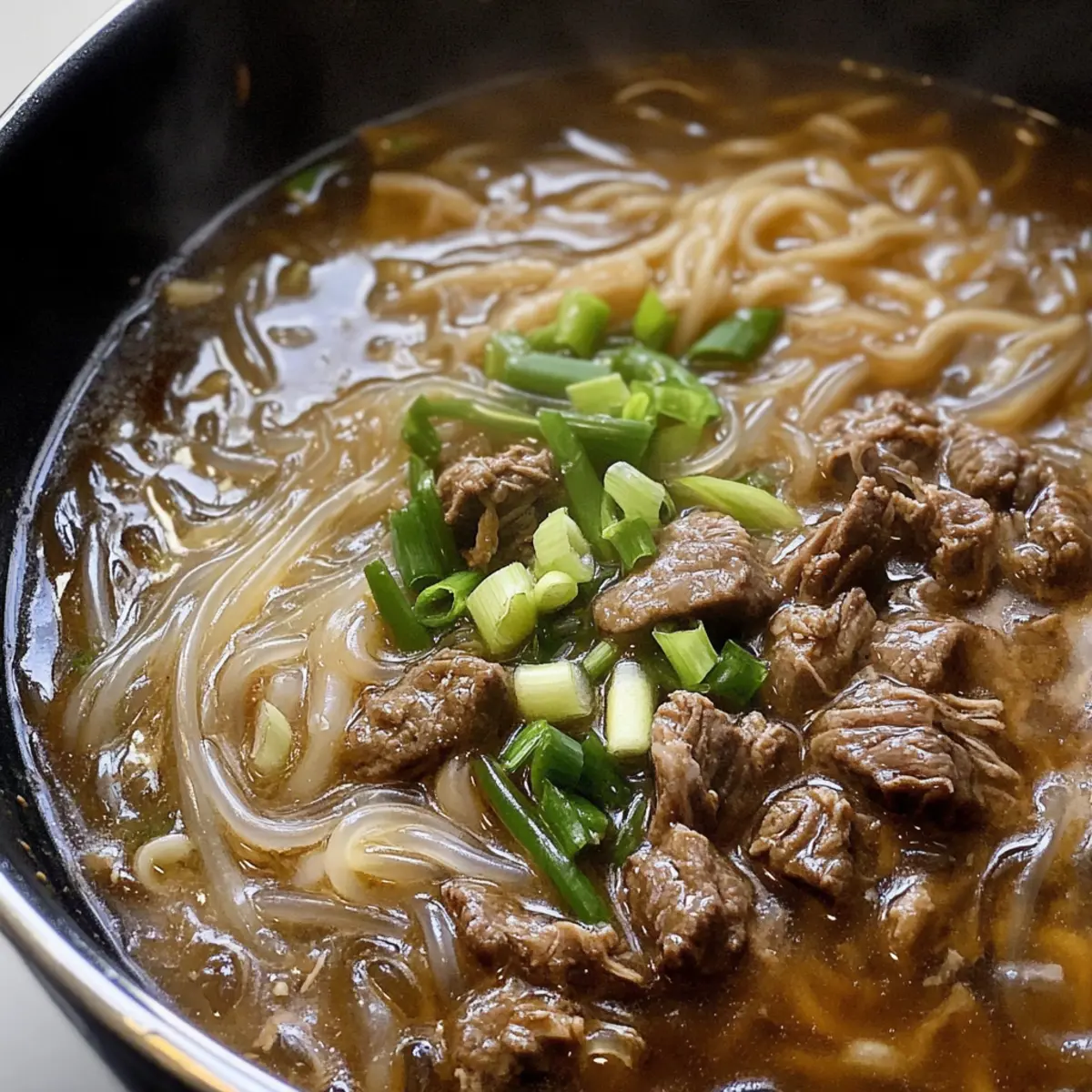
Korean Beef Bulgogi Stew Recipe FAQs
What is the best way to select ripe and fresh ingredients?
Absolutely! For the best results, select high-quality ingredients. Choose fresh bulgogi that is bright in color and well-marbled. When picking mushrooms, look for ones that are firm and free of dark spots. Sweet potato glass noodles should be stored in a dry place and not have an expired date. Fresh green onions should feel crisp to the touch.
How can I store leftovers from my Korean Beef Bulgogi Stew?
To store your stew, cool it completely, then pour it into an airtight container and refrigerate. This stew can stay fresh in the fridge for up to 3 days. Make sure to reheat it gently on the stovetop to preserve the texture and flavor. If you notice any dark spots on your leftover stew, it’s best to discard it.
Can I freeze Korean Beef Bulgogi Stew for later?
Yes indeed! To freeze your stew, allow it to cool completely first. Then, transfer it into a freezer-safe container, leaving some space at the top for expansion. It can be stored for up to 3 months. When you’re ready to enjoy it again, defrost it in the fridge overnight and then gently reheat it on the stove with a splash of broth or water to rejuvenate the noodles.
What should I do if my noodles are too soft or mushy after cooking?
Oh no! If your noodles turn out too soft, it may be because they were over-soaked or cooked for too long. For future batches, soak them for just 10 minutes and check their doneness during cooking after 2 minutes. If they seem to be too cooked, reduce the heat immediately. You can also add firmer vegetables to balance out the texture next time.
Is this recipe suitable for people with specific dietary needs?
Very much so! This Korean Beef Bulgogi Stew can be adapted for various dietary considerations. If you have gluten issues, use gluten-free soy sauce. For those with allergies, substitute ingredients like enoki mushrooms with safer alternatives such as zucchini or carrots. Always communicate dietary restrictions with friends or family to create a safe dining experience!
Can I use fresh bulgogi instead of leftovers?
Absolutely! If you’re starting with fresh marinated bulgogi, ensure it’s cooked thoroughly before adding it to your stew. Simply season your beef with your favorite marinade, quickly stir-fry it until browned, and then follow the rest of the stew instructions. Fresh bulgogi will add a delightful flavor to the stew, enhancing the warming comfort of the dish.
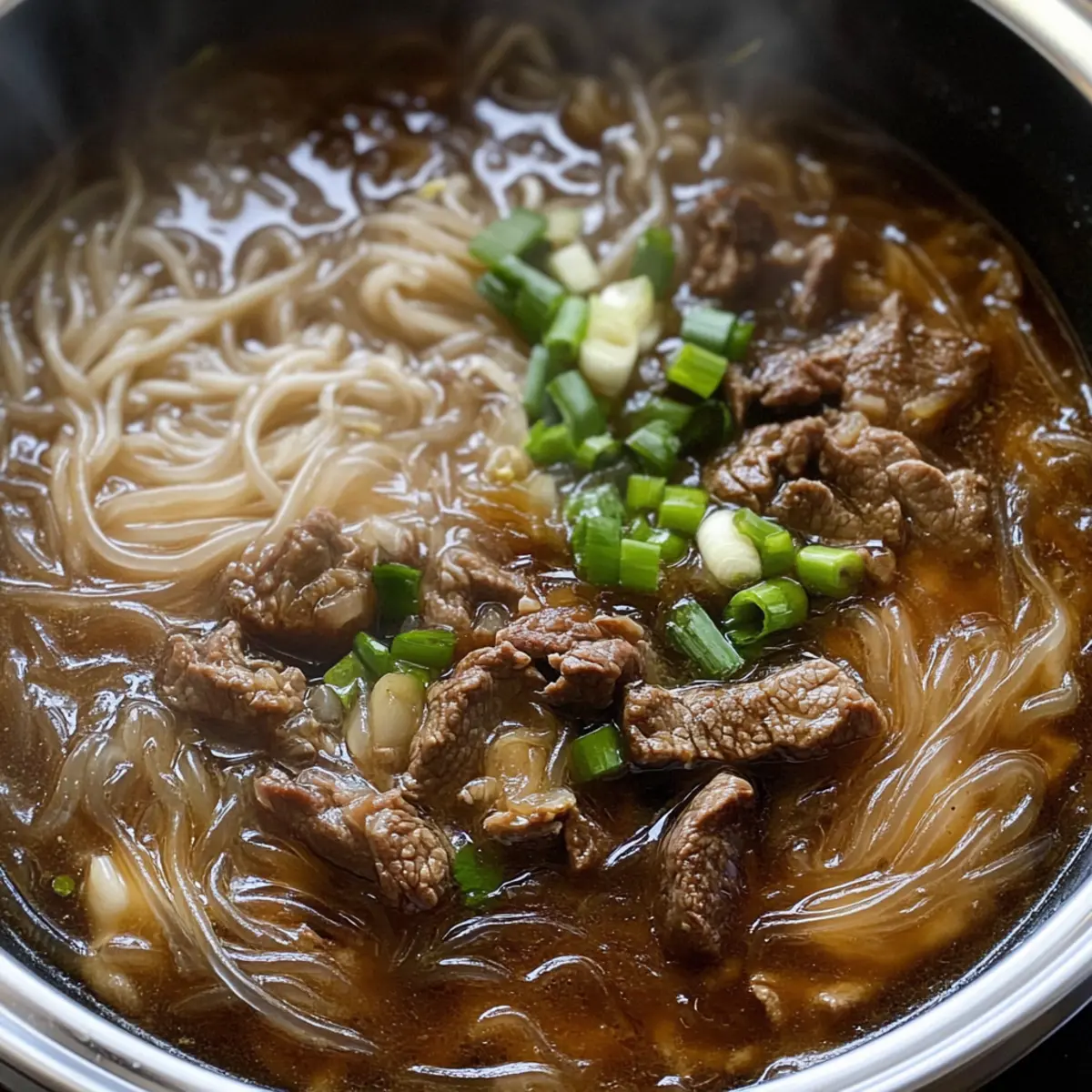
Savor Cozy Nights with Korean Beef Bulgogi Stew Delight
Ingredients
Equipment
Method
- Soak the sweet potato glass noodles in warm water for about 10 minutes.
- Heat the leftover Korean beef bulgogi in a medium-sized pot over medium heat for about 3-4 minutes.
- Add a splash of dark soy sauce and a drizzle of sesame oil, stirring for 1-2 minutes.
- Pour in 4 cups of water or beef broth and bring to a gentle boil for 3-5 minutes.
- Add the soaked glass noodles and enoki mushrooms, and cook for an additional 2-3 minutes.
- Remove from heat and garnish with chopped green onions before serving.
Leave a Reply