
As the alluring aroma of sizzling meat fills my kitchen, I can’t help but get excited about making authentic Tsukune – Japanese chicken meatballs. These delightful balls meld tender ground chicken with fresh spring onions and fragrant ginger, resulting in a dish that offers both comfort and a taste of Japan. What’s even better is how quick and easy they are to prepare, making them the perfect candidate for your next gathering or cozy dinner. Plus, they come with a sweet soy glaze that elevates them from ordinary to extraordinary, leaving your guests craving more. Ready to bring a touch of izakaya magic to your table? Let’s dive into the delicious world of Japanese chicken meatballs!
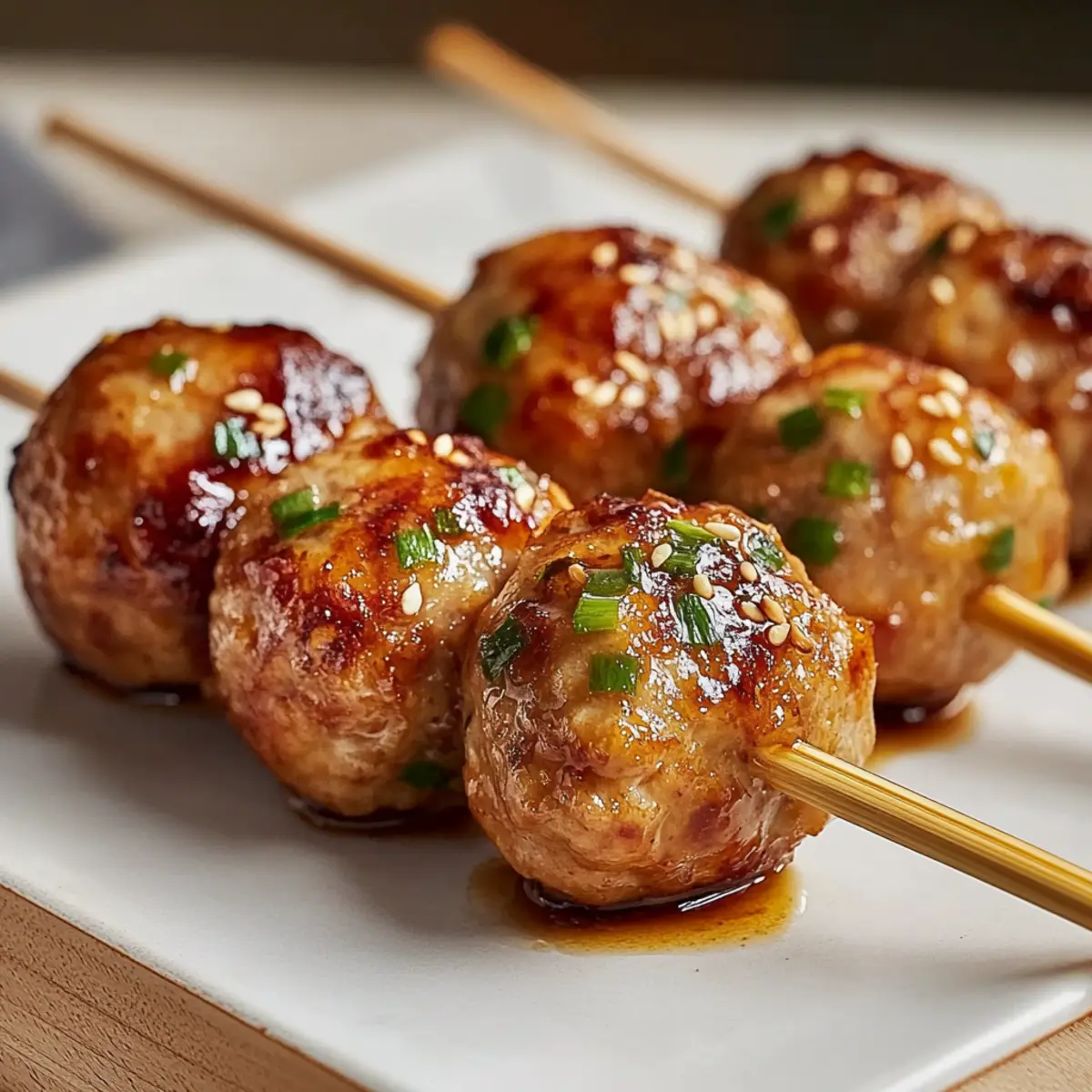
Why Are Tsukune So Irresistible?
Juicy Perfection: Each bite of these Japanese chicken meatballs offers a moist and tender texture that keeps you coming back for more.
Easy Prep: With just a few simple ingredients and quick steps, you can create an authentic dish at home—perfect for busy weeknights or spontaneous gatherings!
Flavor Explosion: The balance of savory and sweet in the soy glaze will elevate your taste buds, making these meatballs a sure hit at any dinner table.
Versatile Delight: Feel free to swap ground chicken for turkey or pork and experiment with spices for a unique twist—don’t forget to pair with a fresh cucumber salad or steamed rice!
Crowd-Pleasing Appetizer: Whether you’re serving them at a party or as a cozy family meal, these meatballs are perfect for sharing, just like the bites in your favorite izakaya.
Japanese Chicken Meatball Ingredients
• Dive into the mouthwatering details of making delicious Japanese chicken meatballs at home!
For the Meatballs
- Ground Chicken – The star ingredient that gives these meatballs their juicy texture.
- Spring Onions – Freshness and a mild onion flavor, but regular onions can be used as a substitute.
- Ginger (grated) – Provides zesty warmth; fresh ginger is ideal, though powdered works in a pinch.
- Egg – Binds the mixture together for perfect meatballs; no substitute recommended for binding.
- Bread Crumbs – Essential for texture—opt for panko for a crispier bite or gluten-free alternatives if needed.
- Shiso Leaves (optional) – Adds a unique minty flavor; fresh basil is a solid substitute or you can omit it.
For the Cooking
- Vegetable Oil – Use for frying; any neutral oil will work well.
- Soy Sauce – Key for glazing, bringing in that umami flair; low-sodium is a healthier choice.
- Cooking Sake – Enhances flavor; can be swapped with dry sherry or omitted if necessary.
- Sugar (or Teriyaki sauce) – Balances the saltiness of soy sauce; consider honey or maple syrup for sweetness instead.
Craft your very own Japanese chicken meatballs that will transport your taste buds straight to Japan!
Step‑by‑Step Instructions for Authentic Tsukune – Japanese Chicken Meatballs with Sweet Soy Glaze
Step 1: Prepare the Mixture
In a mixing bowl, combine ground chicken, finely chopped spring onions, grated ginger, egg, bread crumbs, and optional shiso leaves. Use your hands to mix until the ingredients blend smoothly, about 2-3 minutes. Make sure the mixture is evenly combined to ensure tender Japanese chicken meatballs. Set aside to allow the flavors to meld while you prepare your workstation.
Step 2: Shape the Meatballs
Wet your hands with water to prevent sticking, then take a small amount of the mixture—about 1-2 tablespoons—and form it into a ball. Insert a skewer into each meatball and carefully shape it evenly around the skewer. This step ensures that every bite is packed with flavor and makes for easy handling when you cook the Tsukune.
Step 3: Heat the Oil
In a large frying pan, heat vegetable oil over medium-high heat until shimmering, approximately 2 minutes. Carefully place the skewered meatballs in the pan, ensuring they are not crowded. Cook for 2-3 minutes until they develop a golden-brown crust on one side. Use tongs to flip the meatballs and continue cooking for another 2-3 minutes until all sides are browned and cooked through.
Step 4: Make the Glaze
While the meatballs are cooking, prepare the sweet soy glaze. In a small bowl, combine soy sauce, cooking sake, and sugar, mixing thoroughly. Once the meatballs are browned, pour the glaze mixture into the pan. Let it come to a boil, then reduce the heat to low, allowing the sauce to simmer and thicken slightly.
Step 5: Baste and Finish Cooking
Baste the meatballs with the glaze using a spoon for about 1 minute on each side. This step infuses the flavors of the sweet soy glaze into the meatballs, making them irresistible. Continue cooking until the sauce becomes sticky and coats the meatballs beautifully, adding an enticing shine.
Step 6: Serve and Garnish
Once cooked, transfer the Tsukune skewers to a serving plate, making sure to drizzle any extra sauce from the pan over them. Garnish with optional sesame seeds or chopped green onions for added flavor and presentation. These savory Japanese chicken meatballs are best served hot, so dig in and enjoy your homemade culinary masterpiece!
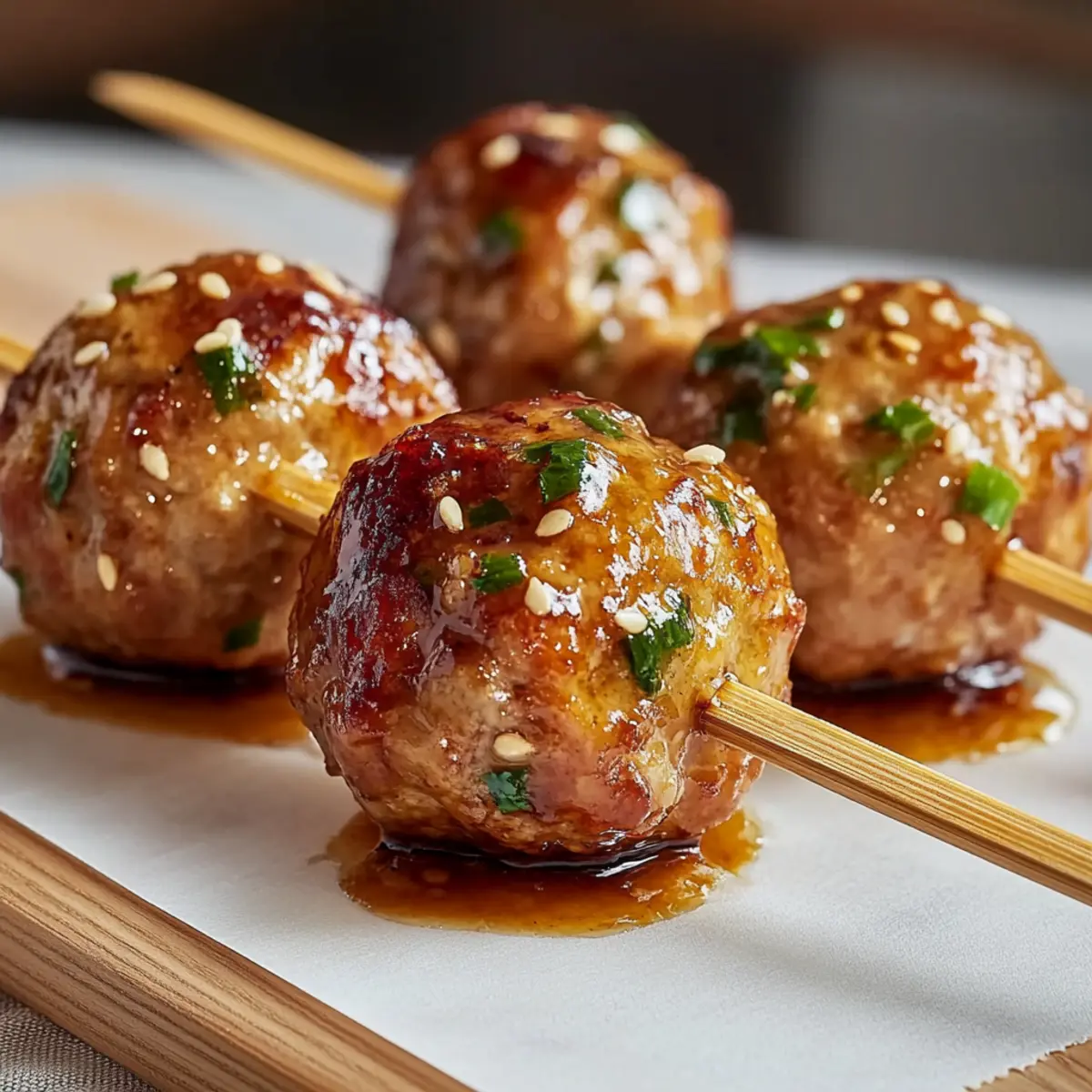
What to Serve with Authentic Tsukune – Japanese Chicken Meatballs
Nothing says comfort like a delicious meal that complements these succulent meatballs, inviting you to indulge in every bite.
-
Steamed Rice: A classic pairing that soaks up the savory-sweet glaze, balancing flavors beautifully and offering a satisfying base for the meal.
-
Cucumber Salad: Lightly dressed with rice vinegar and sesame oil, this refreshing salad adds a crisp contrast that invigorates your palate. Enjoy the crunch!
-
Miso Soup: Warm and comforting, this traditional Japanese broth enhances the experience of Tsukune, providing a soothing backdrop to your meal.
-
Pickled Vegetables: Serve a side of pickles to introduce a tangy element that cuts through the richness of the meatballs. They provide a delightful crunch!
-
Grilled Corn on the Cob: Charred sweetness from the corn pairs wonderfully with the umami flavors of Tsukune, bringing a summer vibe to your table.
-
Cold Sapporo Beer: This light, crisp beer complements the savory profile of the meatballs perfectly, making for a refreshing drink choice during your dining experience.
-
Green Tea Ice Cream: For dessert, indulge in this creamy treat to end your meal on a sweet, refreshing note that leaves you satisfied.
Enhancing your Tsukune with these thoughtfully chosen sides and beverages will create a harmonious dining experience that delights every sense!
Japanese Chicken Meatballs Variations
Feel free to unleash your creativity with these delightful variations that will add a personal touch to your Tsukune!
- Pork Alternative: Substitute ground chicken with ground pork for a richer flavor profile that pairs beautifully with the sweet soy glaze.
- Spicy Twist: Incorporate a teaspoon of chili paste into the meatball mixture for a fiery kick that will awaken your taste buds.
- Herb Infusion: Replace shiso leaves with fresh cilantro or mint for a refreshing burst of flavor that complements the meatballs perfectly.
- Zesty Addition: Add grated lime or lemon zest into the mixture for a lively citrus note that contrasts wonderfully with the savory glaze.
- Honey Soy Glaze: Swap sugar for honey in the glaze to create a natural sweetness that enhances the umami flavor of the soy sauce.
- Baking Option: For a healthier twist, bake the meatballs in the oven at 190°C (375°F) instead of frying, letting the glaze caramelize beautifully.
- Dip It: Serve with a side of sweet chili sauce or homemade garlic mayo, offering a creamy dip that contrasts with the meatballs’ texture.
- Loaded Skewers: Alternate meatballs with bell pepper and onion chunks on the skewer, adding layers of flavor and a vibrant touch to your dish.
For more delicious inspiration, consider trying Sticky Garlic Chicken or enjoy a refreshing Chopped Chicken Caesar as a side. Each of these dishes complements your Tsukune beautifully, creating a wonderful meal experience. Enjoy experimenting!
How to Store and Freeze Tsukune
Fridge: Store leftover Tsukune in an airtight container for up to 3 days to maintain freshness and flavor. Be sure to let them cool completely before sealing to prevent condensation.
Freezer: For longer-term storage, freeze uncooked meatballs for up to 1 month. Place them in a single layer on a baking sheet to freeze, then transfer to a freezer bag.
Reheating: To reheat frozen Tsukune, cook them directly from frozen on a skillet over medium heat until heated through, about 10-12 minutes. Alternatively, bake at 190°C (375°F) for 20-25 minutes, basting with a bit of glaze for added flavor.
Meal Prep Ready: Preparing Japanese chicken meatballs in advance is a great way to enjoy them whenever you crave a taste of Japan, ensuring a delightful meal is just minutes away!
Tips for the Best Tsukune
-
Mix Well: Knead the meat mixture thoroughly for a tender texture; under mixing can lead to dry meatballs.
-
Oil Your Hands: Wetting your hands while shaping helps prevent sticky fingers, ensuring uniform and beautiful Japanese chicken meatballs.
-
Mind the Heat: Cooking over medium-high heat allows for a golden crust without burning; be patient and flip only once for even browning.
-
Check Doneness: Ensure the meatballs are fully cooked by checking for internal temperature of at least 75°C (165°F) for safety.
-
Garnish Generously: A sprinkle of sesame seeds or green onions not only elevates flavor but also enhances the presentation of your dish!
Make Ahead Options
These savory Japanese chicken meatballs are perfect for meal prep enthusiasts! You can prepare the meatball mixture up to 24 hours in advance, simply cover it tightly in a bowl and refrigerate to keep it fresh. Form the meatballs and skewers the night before, which saves you precious time on busy weeknights. Additionally, you can freeze uncooked Tsukune for up to 1 month; just be sure to lay them flat on a baking sheet to freeze before transferring them to an airtight container. When ready to cook, thaw in the refrigerator overnight and follow the cooking instructions to achieve that juicy, tender texture, ensuring you have a delicious meal with minimal effort!
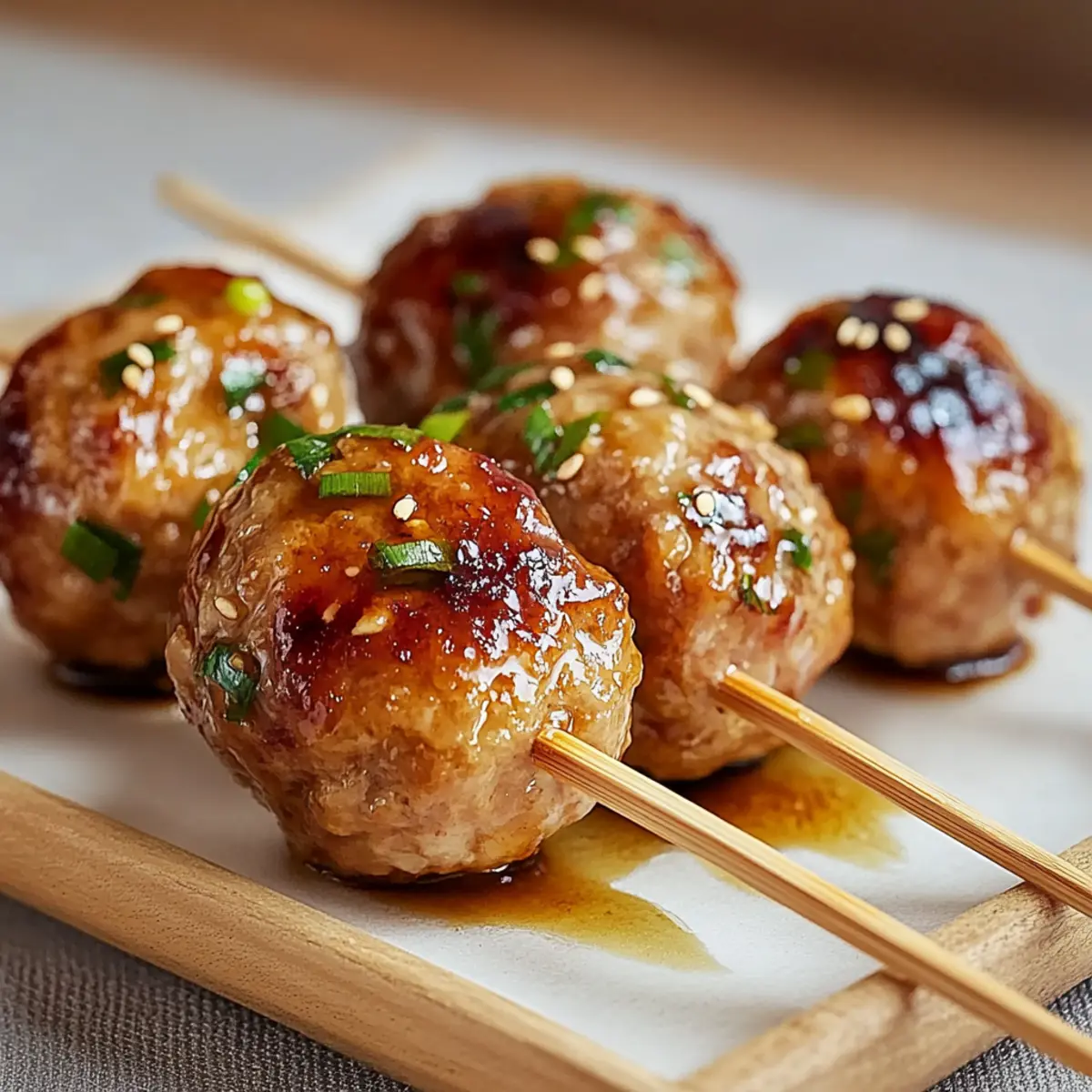
Authentic Tsukune – Japanese Chicken Meatballs Recipe FAQs
What type of ground chicken is best for Tsukune?
Absolutely! For Tsukune, I recommend using ground chicken thighs instead of breasts, as they provide more moisture and flavor. Thigh meat is juicy, which is key to achieving that tender, melt-in-your-mouth texture.
How should I store leftovers from the Tsukune recipe?
Store any leftover Tsukune in an airtight container in the fridge for up to 3 days. It’s crucial to let them cool completely before sealing to avoid moisture build-up, which can make them soggy.
Can I freeze uncooked Tsukune meatballs?
Yes, you can! To freeze uncooked meatballs, first shape them and place them in a single layer on a baking sheet. Freeze them for about 1-2 hours until solid, then transfer them to a freezer bag. They can be stored for up to 1 month. When you’re ready to cook, simply follow the cooking instructions directly from frozen!
What should I do if my Tsukune don’t hold their shape while cooking?
If your meatballs are falling apart, it could be due to too much moisture or not enough binding ingredients. Make sure to use the right proportions of breadcrumbs and egg—a good rule is about 1/4 cup of breadcrumbs per pound of meat. If they still seem too wet, try adding a bit more breadcrumbs to help them hold together.
Are there any dietary options for Tsukune?
Certainly! For a gluten-free version, use gluten-free breadcrumbs and ensure your soy sauce is also gluten-free. You can make these delicious Japanese chicken meatballs halal by sourcing halal ground chicken and ensuring all other ingredients comply with dietary guidelines.
How do I know when the Tsukune are fully cooked?
Check the internal temperature using a meat thermometer—Tsukune should reach at least 75°C (165°F) to ensure they are fully cooked. When they’re golden brown on the outside and firm to the touch, they are likely ready to enjoy!
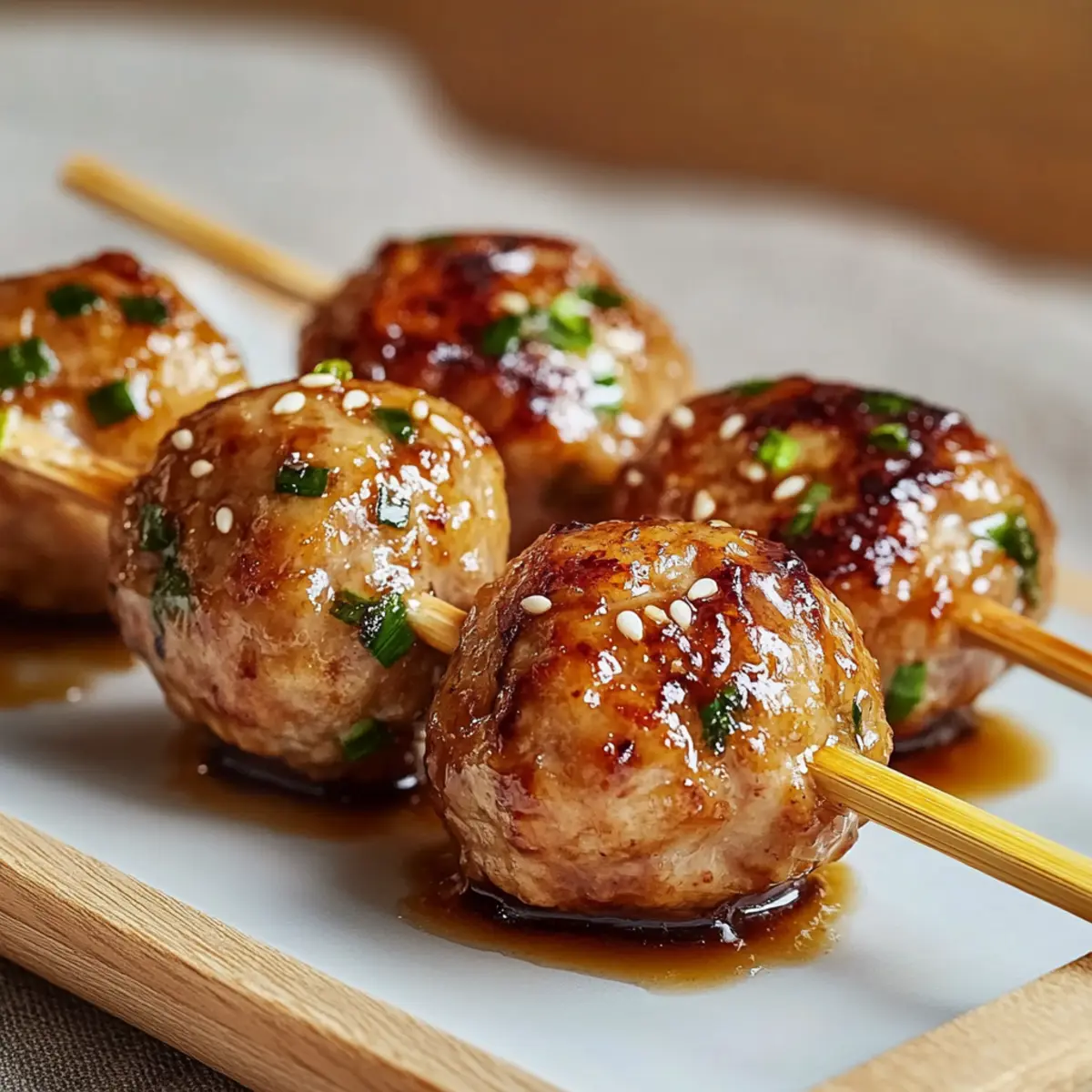
Savory Japanese Chicken Meatballs with Sweet Soy Glaze
Ingredients
Equipment
Method
- In a mixing bowl, combine ground chicken, spring onions, grated ginger, egg, bread crumbs, and shiso leaves. Mix until smooth.
- Wet your hands, take a tablespoon of mixture, and form it into a ball on a skewer.
- Heat vegetable oil in a frying pan over medium-high heat until shimmering. Cook skewered meatballs for 2-3 minutes on one side.
- Prepare the glaze by mixing soy sauce, cooking sake, and sugar in a bowl. Pour it over the meatballs after browning.
- Baste meatballs with glaze for 1 minute on each side until sauce thickens and coats them.
- Transfer cooked meatballs to a serving plate, drizzling any extra sauce over them and garnish as desired.
Leave a Reply