
As the steam rises from my skillet and the kitchen fills with the alluring aroma of spices, I can’t help but feel a wave of excitement. Today, we’re diving into a vibrant Vegan Katsu Curry, featuring crispy sweet potato and eggplant, enveloped in a creamy coconut sauce that’s simply irresistible. This dish stands out not just for its delightful flavors, but also for its quick prep time, making it a perfect weeknight meal for those of us swapping fast food for wholesome homemade goodness. And whether you stick to the sweet potato and eggplant combo or try other veggies like zucchini or hearty tofu, this plant-based delight promises to be a crowd-pleaser. Are you ready to embark on a flavor journey that’s sure to become a family favorite?

Why is Vegan Katsu Curry a Must-Try?
Vibrant, Resourceful Ingredients: This recipe champions colorful vegetables like sweet potato and eggplant, making it not only a feast for the eyes but also a canvas for creativity. Crispy Texture: The delightful crunch of the breaded vegetables adds a luxurious contrast to the creamy coconut curry. Quick and Easy: With minimal prep and cooking time, this dish fits perfectly into any busy weeknight routine. Endless Customization: Feel free to swap in other veggies or proteins like tofu or tempeh for a personalized experience. You can even amp up the heat by tossing in some chili powder for an extra kick! Ready to explore more plant-based delights? Don’t miss out on trying the Honey Curry Roasted to accompany your meal!
Vegan Katsu Curry Ingredients
• Gather these delightful components to create your own Vegan Katsu Curry!
For the Sauce
- Onion – Provides a savory base flavor; you can substitute with shallots for a milder taste.
- Garlic (2 cloves) – Adds aromatic depth; fresh garlic is recommended for the best flavor.
- Carrot (1) – Contributes sweetness and a lovely texture; consider swapping with parsnip if you prefer.
- Ginger (thumb-sized piece) – Offers heat and fragrance; in a pinch, dried ginger can be used (1/2 tsp).
- Curry Powder (2 tbsp) – The essential spice for the curry sauce; choose mild or spicy based on your heat preference.
- Turmeric Powder (1 tsp) – Enhances color and provides great health benefits; optional but highly recommended.
- All-Purpose Flour (1 tbsp) – Thickens the curry sauce; gluten-free flour can be a great substitute if needed.
- Vegetable Stock (1.5 cups) – Adds liquid and flavor to your sauce; homemade or store-bought both work well.
- Coconut Milk (1/2 cup) – Provides creaminess to the sauce; choose full-fat for richness or use a lighter version for fewer calories.
- Soy Sauce (2 tsp) – Enhances umami flavor; swap with tamari for a gluten-free option.
- Maple Syrup (1 tsp) – Adds a touch of sweetness; can substitute with agave syrup or brown sugar if desired.
For the Vegetables
- Eggplant (1) – The star protein offering a creamy texture; feel free to use zucchini or portobello mushrooms instead for variety.
- Sweet Potato (1) – Provides natural sweetness and hearty texture; regular potatoes can be used if preferred.
For the Coating
- Breadcrumbs (1.5 cups) – They create the essential crunch for the vegetables; gluten-free breadcrumbs or crushed cornflakes work just as well.
- Cornflakes (1/2 cup) – An optional ingredient for extra crunch; substitute with more breadcrumbs if you want to keep it simple.
- Plant-Based Milk (1 cup) – Used in the batter for the vegetables, unsweetened almond or oat milk can serve as substitutes.
For Seasoning
- Black Pepper (1/4 tsp) – Adds a layer of flavor; adjust according to your taste.
- Coriander and Cumin Powders (1 tsp each) – Enhance the flavors beautifully; feel free to tweak the amount based on your preference.
This Vegan Katsu Curry, bursting with fresh ingredients, is as nourishing as it is delicious!
Step‑by‑Step Instructions for Vegan Katsu Curry
Step 1: Prepare the Sauce
Start by finely chopping the onion, garlic, ginger, and carrot. In a large skillet, heat a tablespoon of oil over medium heat, then sauté the chopped vegetables for 5-6 minutes until softened and fragrant. This savory base will create a flavorful foundation for your vegan katsu curry.
Step 2: Add Spices and Liquid
Next, sprinkle in the curry and turmeric powder, stirring for about one minute until aromatic. Gradually incorporate the all-purpose flour into the mixture, then whisk in the vegetable stock to avoid clumps. Allow the sauce to simmer for 10-15 minutes over medium heat, until the carrot is tender and the flavors meld beautifully.
Step 3: Blend the Sauce
Once the sauce has thickened, carefully transfer the mixture to a blender. Add the creamy coconut milk, soy sauce, and maple syrup, then blend until smooth and velvety. This luscious sauce will become the heart of your vegan katsu curry, providing a rich and flavorful layer to the dish.
Step 4: Prepare Vegetables
While the sauce blends, peel and slice the sweet potato and eggplant into even thickness, about 1/4 inch. This ensures uniform cooking and a delightful texture. Set the sliced vegetables aside as you move on to the batter preparation.
Step 5: Batter Prep
In a large bowl, combine all-purpose flour, black pepper, coriander, and cumin powders. Gradually whisk in the plant-based milk until smooth and free of lumps. This batter will coat your vegetables, creating that golden crunch in the vegan katsu curry.
Step 6: Coat Vegetables
Dip each slice of sweet potato and eggplant into the batter, ensuring a generous coating. Once coated, roll the vegetables in a mixture of breadcrumbs and cornflakes for that extra crunch. Lay them out on a plate, ready for frying.
Step 7: Fry the Vegetables
In a deep skillet, heat enough oil over medium-high heat for frying. Once hot, carefully add the coated vegetables and fry for about 3-4 minutes on each side or until they’re crispy and golden brown. Transfer the fried slices to paper towels to drain excess oil and maintain their crunch.
Step 8: Serve
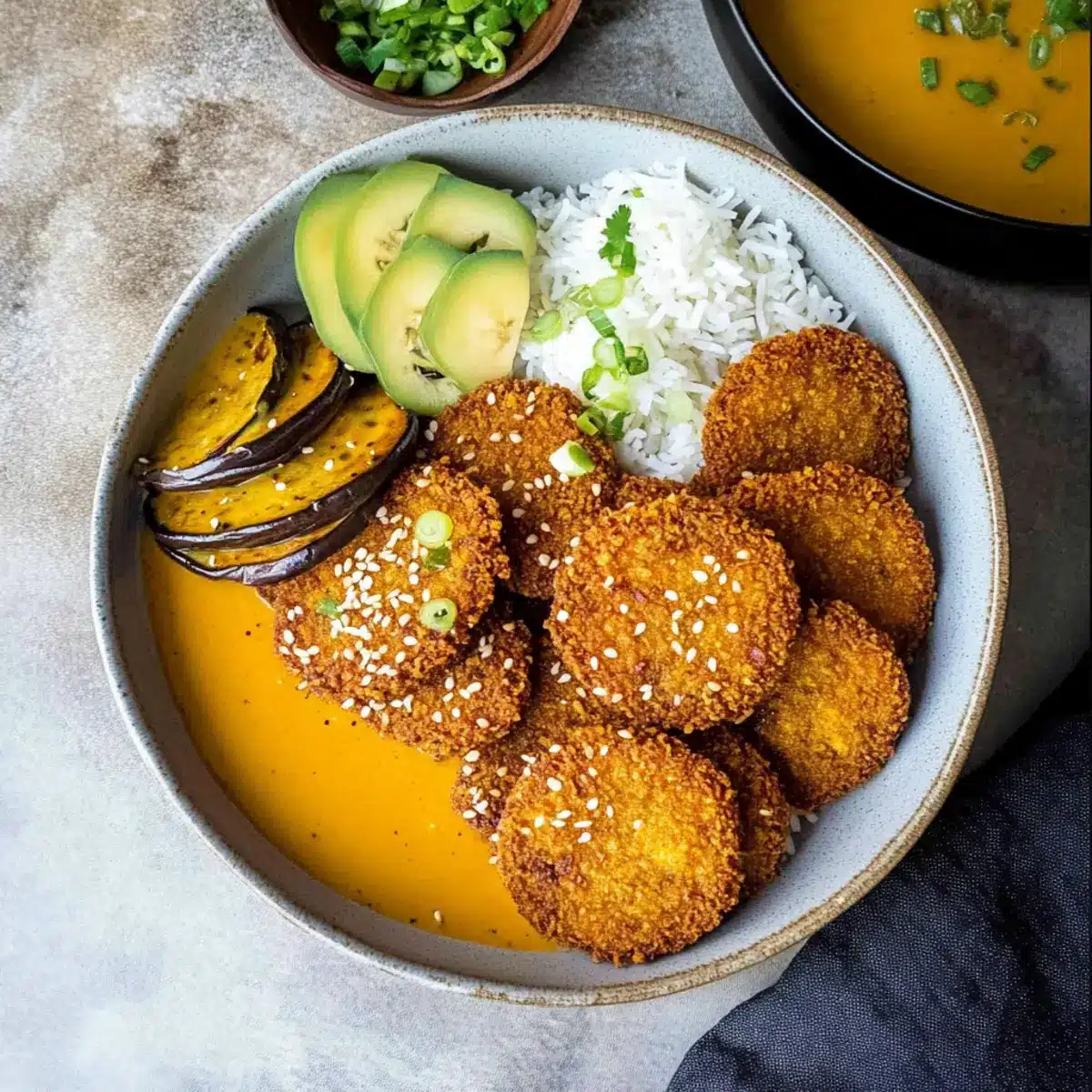
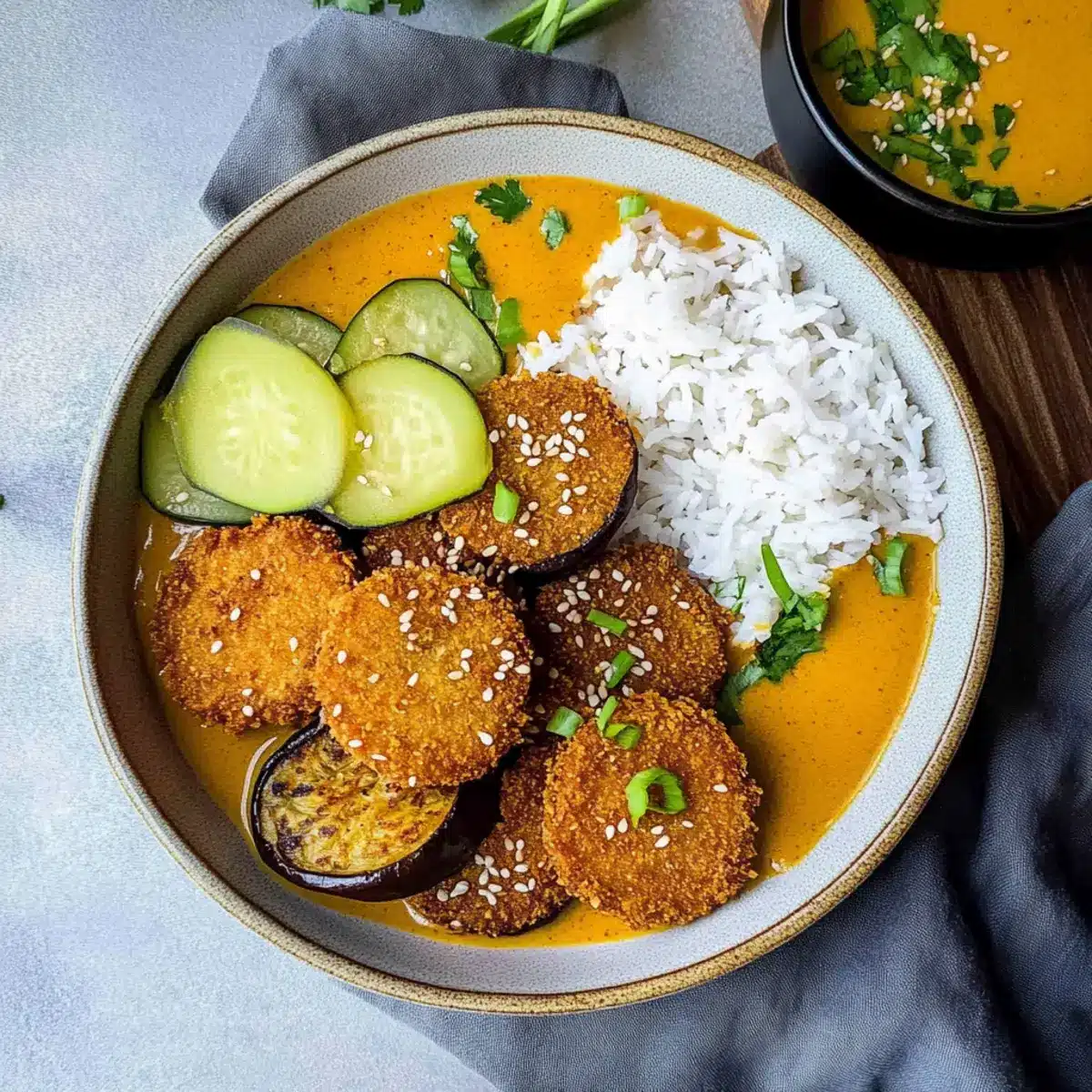
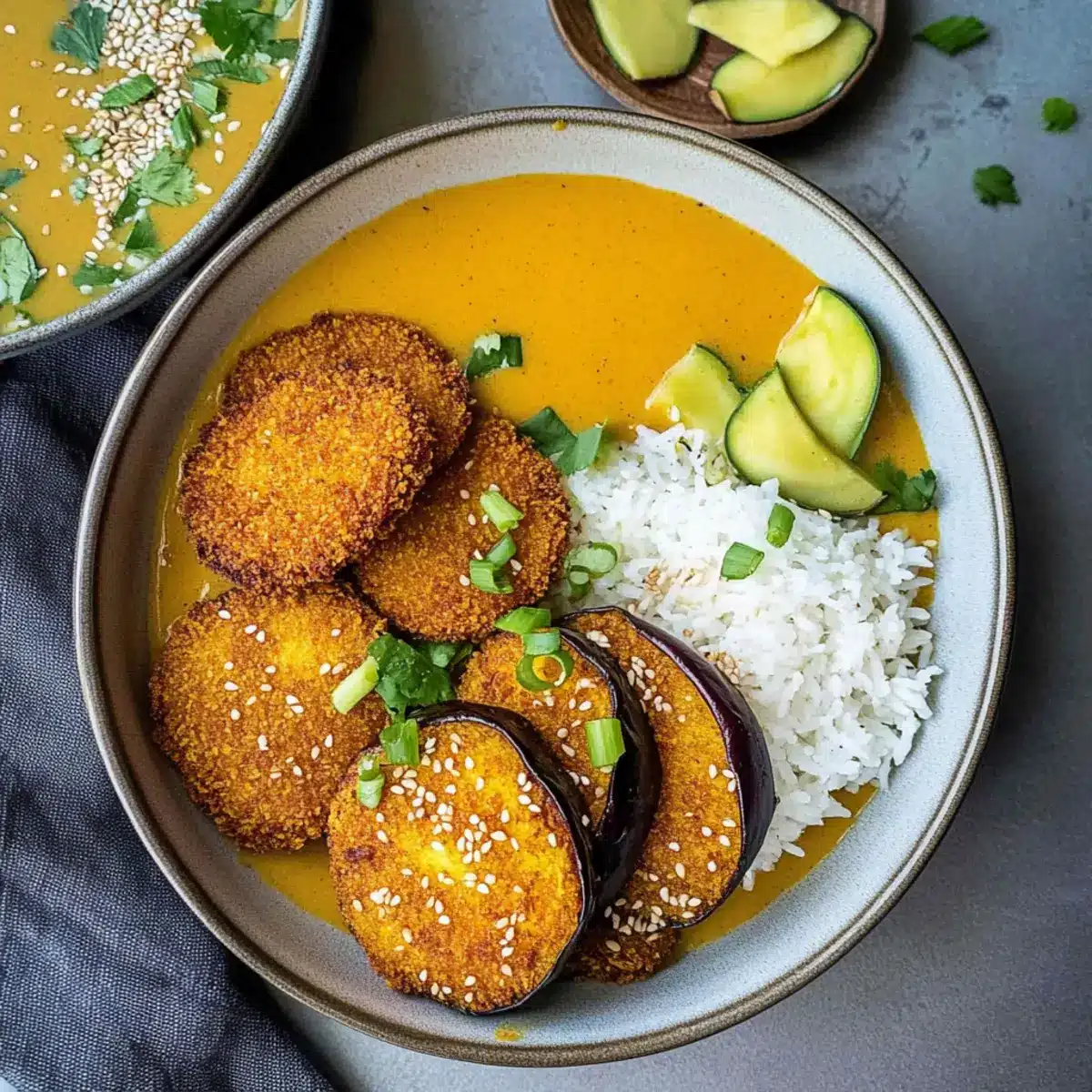
To plate, place a generous serving of steamed rice on each dish, topped with the creamy vegan katsu curry sauce. Arrange the crispy sweet potato and eggplant artfully on top, garnishing with fresh spring onions and sesame seeds for a pop of color. Your delicious Vegan Katsu Curry is ready to serve!
What to Serve with Vegan Katsu Curry
Comforting, flavorful accompaniments can enhance your Vegan Katsu Curry and create a memorable dining experience.
- Steamed Short-Grain Rice: The classic pairing, offering a neutral base to soak up the creamy coconut curry and balance the veggie crunch.
- Pickled Vegetables: Bright, tangy pickles complement the richness of the curry, adding a refreshing crunch that awakens the palate.
- Fresh Cucumber Salad: A light and crisp cucumber salad dressed with lime juice creates a wonderful contrast to the warm, savory curry; perfect for balancing flavors.
- Coconut Rice: Infused with coconut milk, this aromatic rice echoes the creamy sauce and adds a deliciously sweet richness to each bite.
- Miso Soup: A warm bowl of miso soup serves as an excellent starter, enriching the meal with comforting umami and lightness.
- Chili Peppers: For those craving heat, serve sliced fresh chili peppers on the side; they add excitement and spice to each flavorful bite.
- Mango Chutney: This sweet and spicy condiment adds a delightful contrast to the curry, introducing fruity notes that elevate the dish.
- Fruit Sorbet: To cleanse the palate, a refreshing fruit sorbet provides a cool finish after the rich vegan katsu curry experience.
- Green Smoothie: A vibrant green smoothie can serve as a healthful drink option, balancing the meal with nutrients while keeping it light.
- Herbal Tea: A soothing cup of ginger or mint tea can round out the meal, offering warmth and aiding digestion post-curry indulgence.
Expert Tips for Vegan Katsu Curry
-
Air Fryer Option: If you’re looking for a healthier cooking method, use an air fryer. Brush the vegetables lightly with oil and cook at 180°C for 16-18 minutes until crispy.
-
Avoid Overcrowding: When frying, make sure not to overcrowd the skillet. This prevents steaming and keeps the vegetables perfectly crispy, enhancing your Vegan Katsu Curry’s texture.
-
Reheating Wisdom: To maintain the crunch of your fried vegetables, store them separately from the curry sauce. Reheat the vegetables in an air fryer for the best results.
-
Ingredient Swaps: Don’t hesitate to customize! Other vegetables like zucchini or cauliflower work beautifully, and using tofu or tempeh can boost the protein content of your Vegan Katsu Curry.
-
Taste as You Go: Taste and adjust your seasonings—this allows you to personalize the spice level and sweetness, ensuring a final dish that perfectly matches your palate!
Make Ahead Options
These Vegan Katsu Curry preparations are perfect for busy home cooks looking to save time! You can slice and coat the sweet potato and eggplant up to 24 hours in advance, storing them in the refrigerator to maintain freshness. Additionally, you can prepare the creamy coconut curry sauce ahead of time and refrigerate it for up to 3 days. To keep the crispy texture, fry the vegetables just before serving. When you’re ready to enjoy, simply reheat the sauce gently on the stove and fry the coated veggies fresh to ensure they are just as delicious and perfectly crispy as when you first made them. This makes meal planning a breeze!
How to Store and Freeze Vegan Katsu Curry
- Fridge: Store leftover vegan katsu curry in an airtight container for up to 3-4 days. For the best flavor and texture, keep the crispy vegetables separate from the sauce.
- Freezer: You can freeze the curry sauce alone for up to 3 months. Thaw overnight in the fridge before reheating. Just remember to fry fresh vegetables for the best crunch!
- Reheating: Gently reheat the curry sauce on the stove over low heat, stirring occasionally to avoid sticking. For crispy vegetables, use an air fryer or oven to restore their crunch.
- Room Temperature: It’s best to avoid leaving the vegan katsu curry at room temperature for more than 2 hours to ensure food safety.
Vegan Katsu Curry Variations
Feel free to explore these exciting twists to make this Vegan Katsu Curry even more delightful and suited to your taste!
-
Other Veggies: Experiment with zucchini, cauliflower, or bell peppers for added variety and texture. Each vegetable brings its own unique flavor and charm to the dish!
-
Tofu Power: Swap in firm tofu or tempeh for a protein boost. Simply cube and marinate for added flavor before battering and frying.
-
Spicy Adventure: Amp up the heat by adding chili powder or a splash of sriracha to the batter or sauce. This can transform your curry into a fiery sensation!
-
Nutty Flavor: Add a handful of crushed peanuts or cashews as a final garnish. This twist introduces a delightful crunch and nutty flavor that pairs beautifully with the creaminess of the curry.
-
Sweetening it Up: For a touch of sweetness, consider swapping out maple syrup with coconut sugar or honey (if not strictly vegan). This can give the sauce a deeper flavor profile.
-
Gluten-Free Option: Use gluten-free breadcrumbs and flour to make this dish completely gluten-free while maintaining that scrumptious crunch. You can also use crushed cornflakes for a fun texture.
-
Creamy Twist: For a richer sauce, blend in a couple of tablespoons of peanut butter along with the coconut milk. This addition enhances the creaminess and adds a delightful nutty undertone.
-
Fresh Herb Boost: Garnish with fresh cilantro or basil before serving for an aromatic finish. These herbs can elevate the entire dish with their aroma and vibrant color.
As you dive into these variations, don’t forget to check out my recipe for Japanese Katsu Bowls if you’re interested in more delicious ways to enjoy crispy breaded vegetables! Each option keeps your meals fresh, exciting, and utterly satisfying!
Vegan Katsu Curry Recipe FAQs
What is the best way to select ripe eggplant and sweet potatoes?
Absolutely! When choosing eggplant, look for ones that are firm and glossy, without dark spots all over. A mature eggplant should feel heavy for its size. For sweet potatoes, opt for smooth, unblemished skin and a firm texture. Avoid any that are sprouting or have soft spots.
How should I store leftover vegan katsu curry?
Store any leftover vegan katsu curry in an airtight container in the fridge, where it will stay fresh for about 3-4 days. To keep the crispy vegetables from getting soggy, I recommend storing them separately from the curry sauce. Reheat the sauce gently on the stove, and refresh the vegetables in an air fryer or oven for that lovely crunch!
Can I freeze vegan katsu curry?
Definitely! You can freeze the curry sauce separately for up to 3 months. To do this, cool the sauce completely, then transfer it to a freezer-safe container. When you’re ready to use it, thaw it overnight in the fridge and then reheat on low heat. For the crispy vegetables, I suggest frying fresh ones instead of freezing them, as they are best enjoyed right out of the pan!
What if my curry sauce is too thick?
Very! If your curry sauce turns out thicker than desired, simply whisk in a little extra vegetable stock or water until you reach your preferred consistency. Gradually add the liquid while stirring over low heat, tasting as you go, until it’s just right. Don’t be shy to experiment with flavors or adjust seasoning!
Are there any common allergens in vegan katsu curry?
Yes, some ingredients can be potential allergens. The soy sauce used in the recipe contains gluten, but you can easily substitute it with tamari for a gluten-free option! Additionally, if you’re using breadcrumbs, make sure they are certified gluten-free. Always keep an eye on allergies when cooking for yourself or loved ones, and opt for alternative ingredients as needed.
Can pets eat vegan katsu curry?
I don’t recommend it. While many ingredients like sweet potatoes and carrots are safe for pets, the spices and sauce in vegan katsu curry may not be suitable. Ingredients like garlic can be harmful, so it’s best to keep this delicious dish for human enjoyment only!
Crispy Vegan Katsu Curry That Will Brighten Your Dinner Table
Ingredients
Equipment
Method
- Finely chop the onion, garlic, ginger, and carrot. Heat a tablespoon of oil in a skillet over medium heat, and sauté the chopped vegetables for 5-6 minutes until softened.
- Sprinkle in the curry and turmeric powder, stirring for about one minute. Gradually incorporate the all-purpose flour, then whisk in the vegetable stock. Allow to simmer for 10-15 minutes.
- Transfer the thickened sauce to a blender. Add coconut milk, soy sauce, and maple syrup, then blend until smooth.
- Peel and slice the sweet potato and eggplant into uniform thickness of about 1/4 inch. Set aside.
- Combine all-purpose flour, black pepper, coriander, and cumin powders in a bowl. Whisk in plant-based milk until smooth.
- Dip each slice of sweet potato and eggplant into the batter, then roll in breadcrumbs and cornflakes.
- Heat oil in a deep skillet over medium-high heat. Fry coated vegetables for 3-4 minutes on each side until crispy and golden brown.
- Plate with a generous serving of steamed rice topped with the creamy vegan katsu curry sauce and the crispy vegetables. Garnish with spring onions and sesame seeds.
Leave a Reply