
As I watched the vibrant colors of this dish come together, I couldn’t help but crave a hearty meal that dances on my taste buds. Enter Spicy Korean Gochujang Beef Noodles—a delightful whirlwind of flavors that brings a taste of Korea right to your kitchen. The warm embrace of gochujang blends seamlessly with tender strips of beef, while garlic and onion add a fragrant charm that’s impossible to resist. Not only is this dish perfect for a quick weeknight dinner, but it’s also endlessly customizable, allowing you to toss in your favorite veggies or switch up the protein. Whether you’re a seasoned home chef or just shaken off the fast-food rut, these noodles are about to elevate your dinner game. What will you add to make it your own?
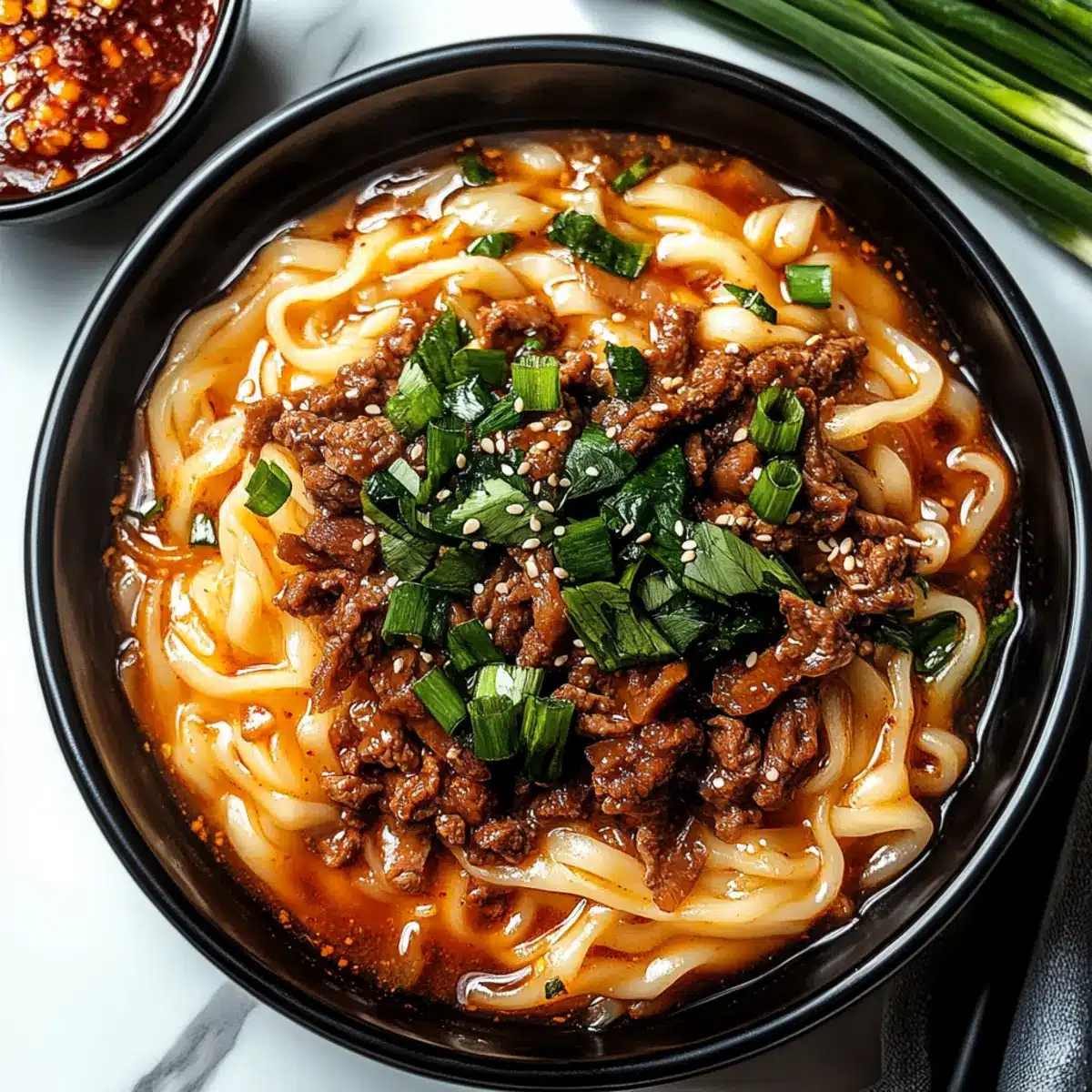
Why are these noodles a must-try?
Fiery flavor explosion: The bold spiciness of gochujang makes every bite a thrilling experience, bringing a taste of Korean cuisine right to your table.
Quick and easy: Perfect for busy weeknights, this recipe comes together in just about 30 minutes, making dinner a breeze.
Endless customization: Feel free to swap out the beef for chicken, shrimp, or tofu, and use any vegetables you have on hand—get creative!
Bold finish: You’ll love the glossy, rich sauce that clings to each noodle, complemented by a delightful crunch from fresh toppings like green onions and sesame seeds.
Crowd-pleaser: This dish not only satisfies your cravings but also impresses family and friends, making it ideal for gatherings. Don’t forget to serve it with kimchi to enhance your meal!
Spicy Korean Gochujang Beef Noodles Ingredients
For the Beef and Vegetables
• Beef Sirloin – A flavorful protein choice; feel free to substitute with chicken, pork, shrimp, or tofu for variety.
• Garlic – Fresh minced garlic brings robust flavor to the dish; use it generously for the best taste.
• Onion (sliced) – Adds sweetness and depth; scallions offer a milder flavor in place of regular onions.
• Red Bell Pepper (sliced) – Offers color and a sweet crunch; can be swapped with any bell pepper or veggies like carrots.
For the Sauce
• Soy Sauce – Delivers umami and saltiness; opt for low-sodium versions if watching your salt intake.
• Brown Sugar – Balances the gochujang’s heat with sweetness; honey or coconut sugar are great alternatives.
• Gochujang (Korean chili paste) – The spicy star of the dish; adjust amounts to cater to your spice tolerance.
• Sesame Oil – Infuses nuttiness and depth; use olive oil for a different flavor twist if needed.
• Rice Vinegar – Adds acidity to balance flavors; apple cider vinegar is an effective substitute.
For the Noodles and Garnish
• Cooked Noodles – Base of the dish; use any noodle type you love, from rice noodles to spaghetti.
• Sesame Seeds – Great for garnish and texture; feel free to skip them if you’re in a pinch.
• Sliced Green Onions – Fresh, crunchy garnish; substitute with cilantro for a different aromatic flavor.
These Spicy Korean Gochujang Beef Noodles are sure to become a new favorite in your home!
Step‑by‑Step Instructions for Spicy Korean Gochujang Beef Noodles
Step 1: Prepare the Ingredients
Begin by thinly slicing the beef sirloin against the grain for maximum tenderness. Slice your onion and red bell pepper to create colorful, crunchy additions. Then, cook your choice of noodles according to package instructions, usually boiling for about 7-10 minutes until al dente. Drain and set aside the noodles, ensuring they’re ready to soak up the sauce later.
Step 2: Heat the Oil
In a large skillet or wok, heat 2 tablespoons of vegetable oil over medium-high heat. Swirl the oil around as it heats up, ensuring it coats the bottom of the pan evenly. You’ll know it’s ready when the oil begins to shimmer slightly. This vital step is essential for achieving a nice sear on the beef, which will enhance the flavor of your Spicy Korean Gochujang Beef Noodles.
Step 3: Sauté the Beef
Add the sliced beef to the hot skillet in a single layer. Sauté for about 3-4 minutes, stirring occasionally, until the beef is well-browned and no longer pink. This step builds that rich, savory base for your dish. Once cooked, remove the beef from the skillet and set it aside on a plate, allowing it to rest while you cook the vegetables.
Step 4: Cook the Aromatics
In the same skillet, add another splash of oil if necessary, and then toss in the minced garlic and sliced onion. Sauté for about 2-3 minutes until the garlic is fragrant and the onions turn translucent. This is the time when the aroma fills your kitchen, hinting at the delicious meal ahead! Stir occasionally to ensure nothing sticks or burns.
Step 5: Add the Vegetables
Next, add the sliced red bell pepper to the skillet. Cook for an additional 2-3 minutes, until it softens slightly but still retains a bit of crunch. The vibrant colors will brighten your Spicy Korean Gochujang Beef Noodles while adding a sweet and slightly smoky flavor. Stir the mixture occasionally for an even cook.
Step 6: Mix the Sauce
While the vegetables are cooking, prepare your sauce. In a small bowl, combine 3 tablespoons of soy sauce, 1 tablespoon of brown sugar, 2 tablespoons of gochujang, 1 teaspoon of sesame oil, and 1 tablespoon of rice vinegar. Whisk together until smooth, ensuring the sugar dissolves completely—this sauce will be the heart of your dish, contributing that signature spicy-sweet flavor.
Step 7: Combine the Ingredients
Return the cooked beef to the skillet with the sautéed vegetables, and pour the prepared sauce over the top. Stir everything together for about 2 minutes over medium heat, allowing the sauce to thoroughly coat the beef and vegetables. You’ll see the glossy sauce bring all the flavors together, making the dish irresistible.
Step 8: Toss in the Noodles
Add your drained, cooked noodles to the skillet, gently tossing them in the sauce and ingredients. Cook for another 2-3 minutes, allowing the noodles to absorb the vibrant flavors of the sauce. Be gentle while mixing to avoid breaking the noodles, ensuring your Spicy Korean Gochujang Beef Noodles look as good as they taste.
Step 9: Garnish and Serve
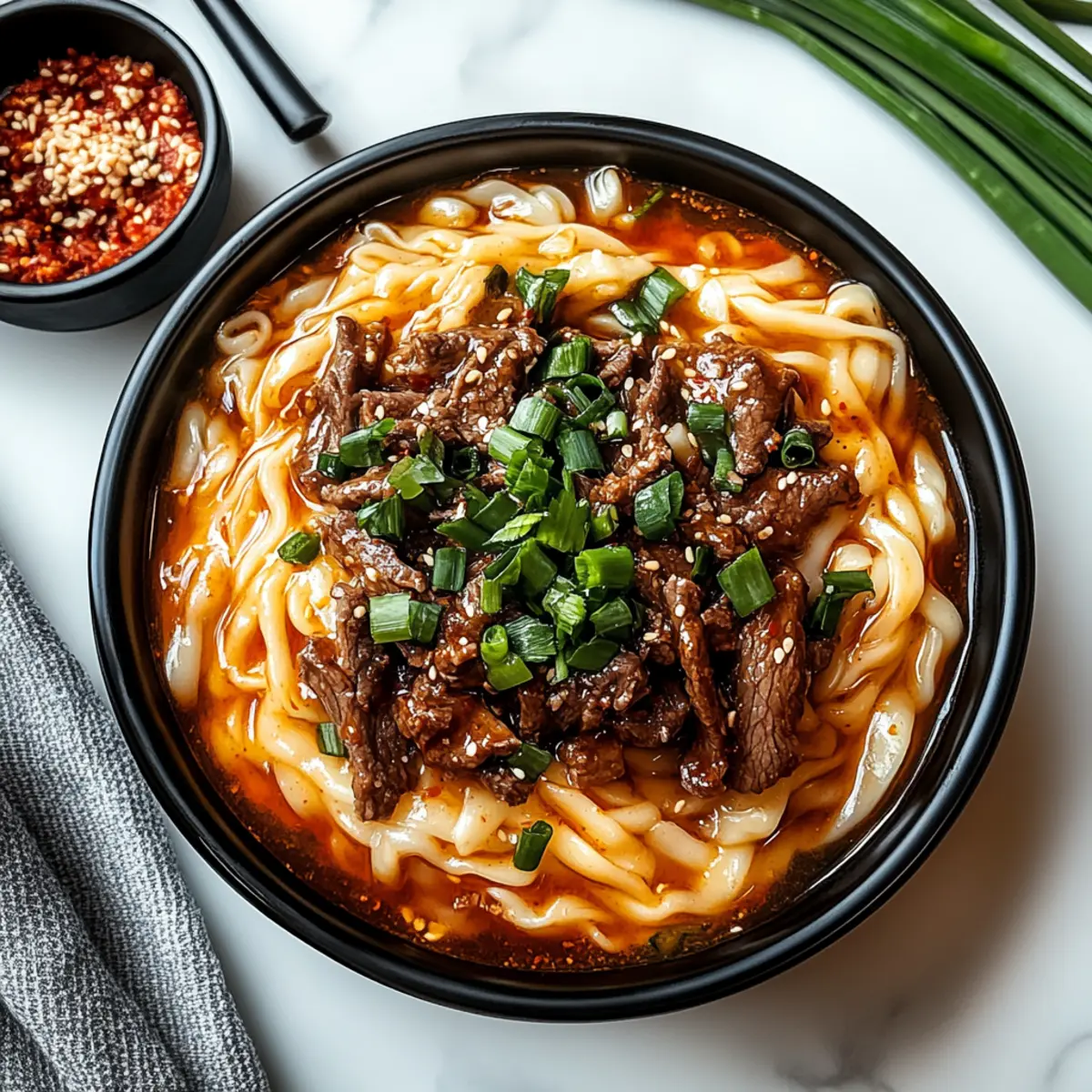
Finally, remove the skillet from heat. Serve your Spicy Korean Gochujang Beef Noodles hot, garnishing with a sprinkle of sesame seeds and sliced green onions for that fresh pop. The combination of textures and flavors promises a delightful meal, ready to impress your family and friends at the dinner table!
Make Ahead Options
These Spicy Korean Gochujang Beef Noodles are a fantastic option for meal prep, saving you both time and hassle during busy weeknights! You can slice the beef and vegetables up to 24 hours in advance and store them in airtight containers in the refrigerator to preserve freshness. Additionally, the sauce can be mixed and kept in the fridge for up to 3 days. When you’re ready to serve, simply sauté the beef and vegetables, mix in the prepared sauce, and add the cooked noodles for a sumptuous dish just as delicious as when freshly made. This makes it easy to whip up a flavorful dinner with minimal effort!
Expert Tips for Spicy Korean Gochujang Beef Noodles
-
Adjust Spice Levels: Start with a small amount of gochujang if you’re unsure about heat; you can always add more to your Spicy Korean Gochujang Beef Noodles later.
-
Proper Noodle Handling: Gently toss the cooked noodles with the sauce to avoid breaking them apart, ensuring a beautiful presentation.
-
Thin Beef Slices: Slice beef thinly against the grain for maximum tenderness; this technique makes a big difference in texture.
-
Switch It Up: Feel free to substitute beef with other proteins like chicken or tofu, and mix in seasonal vegetables for variety in your Spicy Korean Gochujang Beef Noodles.
-
Storage Tips: Store leftovers in an airtight container in the fridge for up to 3-4 days. Reheat gently on the stove with a splash of water to revive the sauce.
Spicy Korean Gochujang Beef Noodles: Customization Ideas
Feel free to explore delicious twists on this recipe that will excite your palate!
- Chicken: Substitute beef with thinly sliced chicken breast for a lighter option that cooks quickly.
- Tofu: For a vegetarian delight, replace the protein with firm tofu, sautéed until golden for added crunch.
- Mixed Veggies: Toss in seasonal vegetables like bok choy or steamed broccoli for extra nutrition and color.
- Heat Variations: Add sliced fresh chili peppers or a pinch of red pepper flakes for an even spicier kick to your noodles.
- Ginger Boost: Incorporate fresh minced ginger alongside garlic for a zesty, aromatic flavor that enhances your dish.
- Cold Noodle Salad: Transform leftovers into a refreshing cold noodle salad with fresh veggies and a squeeze of lime.
- Flavor Additions: Enhance with a splash of sesame oil at the end for a nutty finish, or try adding a tablespoon of peanut butter for a rich twist.
- Sriracha Drizzle: Serve with a side of sriracha or a spicy sauce for those who love to customize their spice levels, paired perfectly with your kimchi!
Let your culinary creativity shine and discover how these delightful adjustments can take your Spicy Korean Gochujang Beef Noodles to exciting new heights!
What to Serve with Spicy Korean Gochujang Beef Noodles
Elevate your dining experience by pairing these bold noodles with delightful side dishes that complement their rich flavors.
- Kimchi: A quintessential Korean side, kimchi adds a tangy crunch that contrasts beautifully with the noodles’ richness.
- Crispy Spring Rolls: These provide a satisfying crunch, delivering a perfect balance to the soft texture of the beef noodles.
- Garlic Bread: The buttery, garlicky bread offers warmth and comfort, making each bite of the noodles even more enjoyable.
- Stir-Fried Greens: Lightly sautéed bok choy or spinach adds freshness and a vibrant green contrast, enhancing the meal’s nutritional value.
- Sesame Cucumber Salad: A refreshing, crisp salad that brightens the palate and cools the heat from the gochujang, making each bite more delightful.
- Cold Beer: A light lager or pale ale pairs wonderfully, cutting through the spice with its refreshing, crisp profile.
- Mango Sticky Rice: If you’re craving something sweet, this dessert contrasts the spicy noodles with its creamy coconut milk and sweetness.
- Green Tea: A soothing beverage to cleanse the palate between bites, green tea enhances the meal’s authenticity and promotes relaxation.
- Fruit Salad: A mix of juicy fruits serves as a light, refreshing end to the meal, providing a great contrast to the spicy main dish.
How to Store and Freeze Spicy Korean Gochujang Beef Noodles
Fridge: Allow leftover Spicy Korean Gochujang Beef Noodles to cool to room temperature before transferring them to an airtight container. Store in the fridge for up to 3-4 days.
Freezer: For longer storage, portion the noodles into freezer-safe bags or containers. They can be frozen for up to 2 months. Thaw overnight in the fridge before reheating.
Reheating: Gently reheat the noodles on the stove over low heat, adding a splash of water to loosen the sauce. Stir occasionally until heated through for the best texture.
Spicy Korean Gochujang Beef Noodles Recipe FAQs
What kind of beef should I use for the noodles?
I recommend using beef sirloin for its tenderness and flavor, but you can also substitute with chicken, pork, shrimp, or tofu to suit your preference. Just remember to slice any protein thinly against the grain to maintain tenderness!
How should I store leftovers from the Spicy Korean Gochujang Beef Noodles?
Absolutely! Allow your leftovers to cool to room temperature before placing them in an airtight container. You can store them in the fridge for up to 3-4 days. This way, you can enjoy the delicious flavors again for a quick meal!
Can I freeze Spicy Korean Gochujang Beef Noodles?
Yes, you can! For freezing, portion the noodles into freezer-safe bags or containers and store them for up to 2 months. When you’re ready to enjoy them again, simply thaw overnight in the fridge and reheat on the stove over low heat, adding a splash of water to revive the sauce.
What should I do if the gochujang makes the dish too spicy?
If you find the spice level is too high, don’t worry! You can balance the heat by adding a bit more brown sugar or even a splash of coconut milk to the sauce. Taste as you go—this helps ensure the flavors are just right for you.
Are there any dietary considerations for this recipe?
Definitely! This recipe can be adapted for various dietary needs. If you’re concerned about allergies, be sure to use gluten-free soy sauce and check for any additives in your gochujang. For a vegetarian or vegan option, just swap the beef with tofu and ensure your ingredients are plant-based.
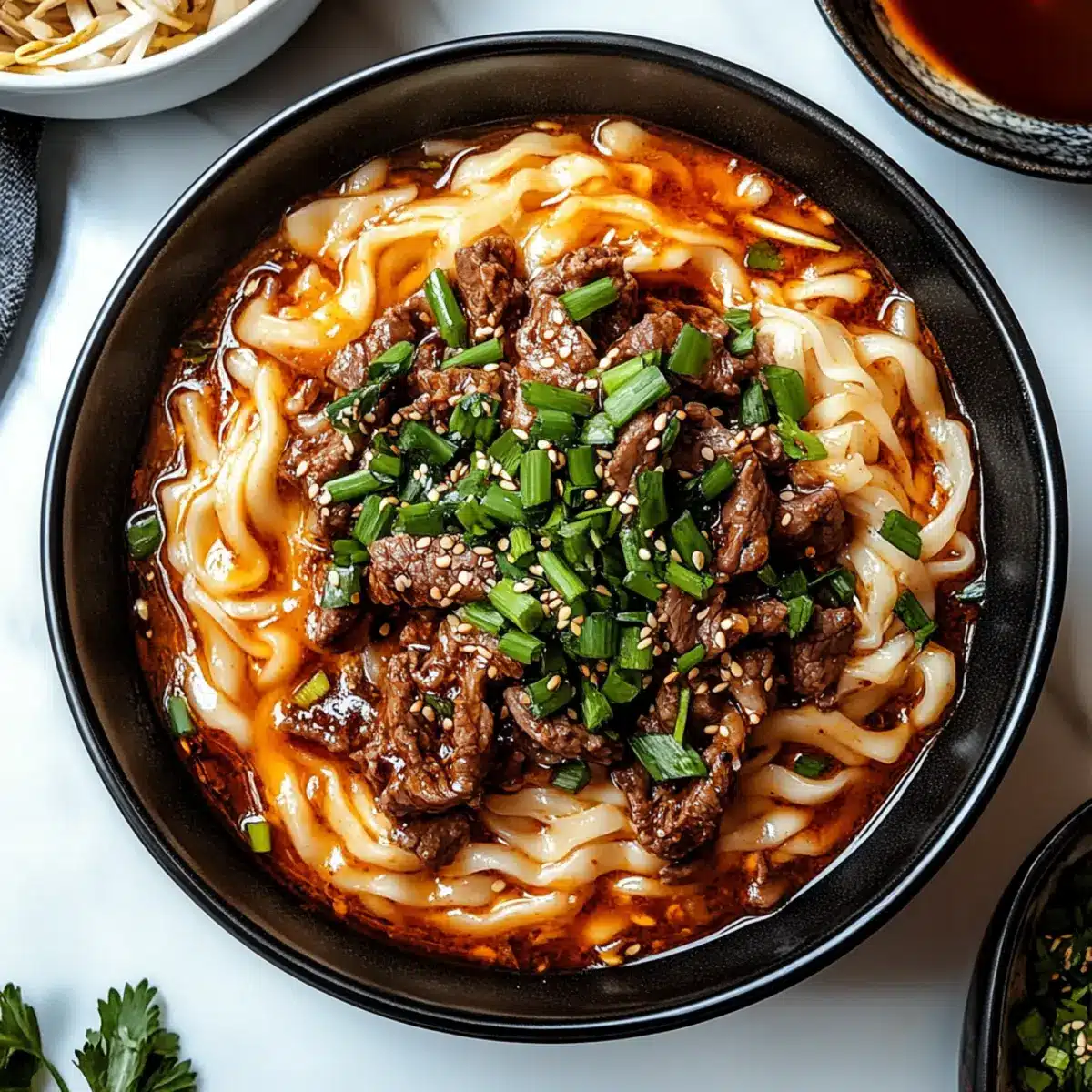
Spicy Korean Gochujang Beef Noodles Bursting with Flavor
Ingredients
Equipment
Method
- Thinly slice the beef sirloin against the grain and prepare vegetables.
- Heat vegetable oil in a large skillet over medium-high heat.
- Sauté sliced beef until browned and cooked through, then set aside.
- Add minced garlic and sliced onion to the skillet, sautéing until fragrant.
- Add sliced red bell pepper and cook until slightly softened.
- In a bowl, combine soy sauce, brown sugar, gochujang, sesame oil, and rice vinegar to create the sauce.
- Return beef to the skillet, pour the sauce over, and stir to combine.
- Add cooked noodles to the skillet, gently tossing to blend with the sauce.
- Serve garnished with sesame seeds and sliced green onions.
Leave a Reply